Table of Contents
The Real Question Traders Are Asking {#the-real-question}
The AI vs. manual trading debate isn't new, but it's gotten sharper in 2026. Models have matured, backtesting is more accessible than ever, and retail traders now have real options beyond hiring a quant or building their own system from scratch.
That said, "which performs better" is the wrong question if you ask it in a vacuum. Performance depends on the market, the strategy, the timeframe, and who's executing. What you actually want to know is which approach fits your goals, your risk tolerance, and the time you realistically have.
This article breaks down both sides with specifics.
How AI Trading Works in 2026 {#how-ai-trading-works}
AI trading in 2026 covers a wide range — from simple rule-based bots to sophisticated systems running on large language models and reasoning engines. What they share is the ability to process signals, identify setups, and generate trade ideas without fatigue or emotional interference.
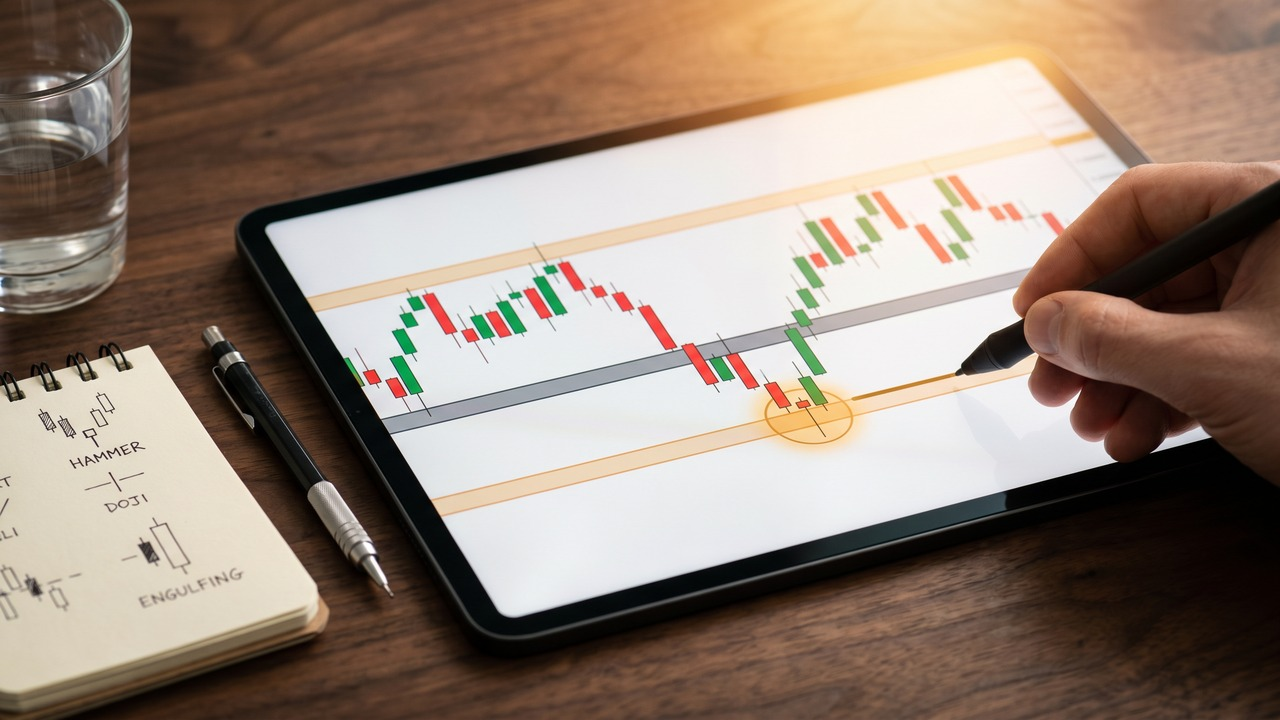
On platforms like Trader.AI, each bot is built around a distinct strategy and powered by a specific model. Slade-0xBE, for example, runs Candlestick Pattern Recognition on Commodities using MiniMax-M2.1. Piston-0x88 applies ADX Trend Strength to Crypto via DeepSeek Reasoner. Every bot has a documented strategy type, market focus, and historical simulation data you can review before making any decisions.
The defining characteristic: these systems follow their rules every time, across every session, without deviation.
How Manual Trading Works {#how-manual-trading-works}
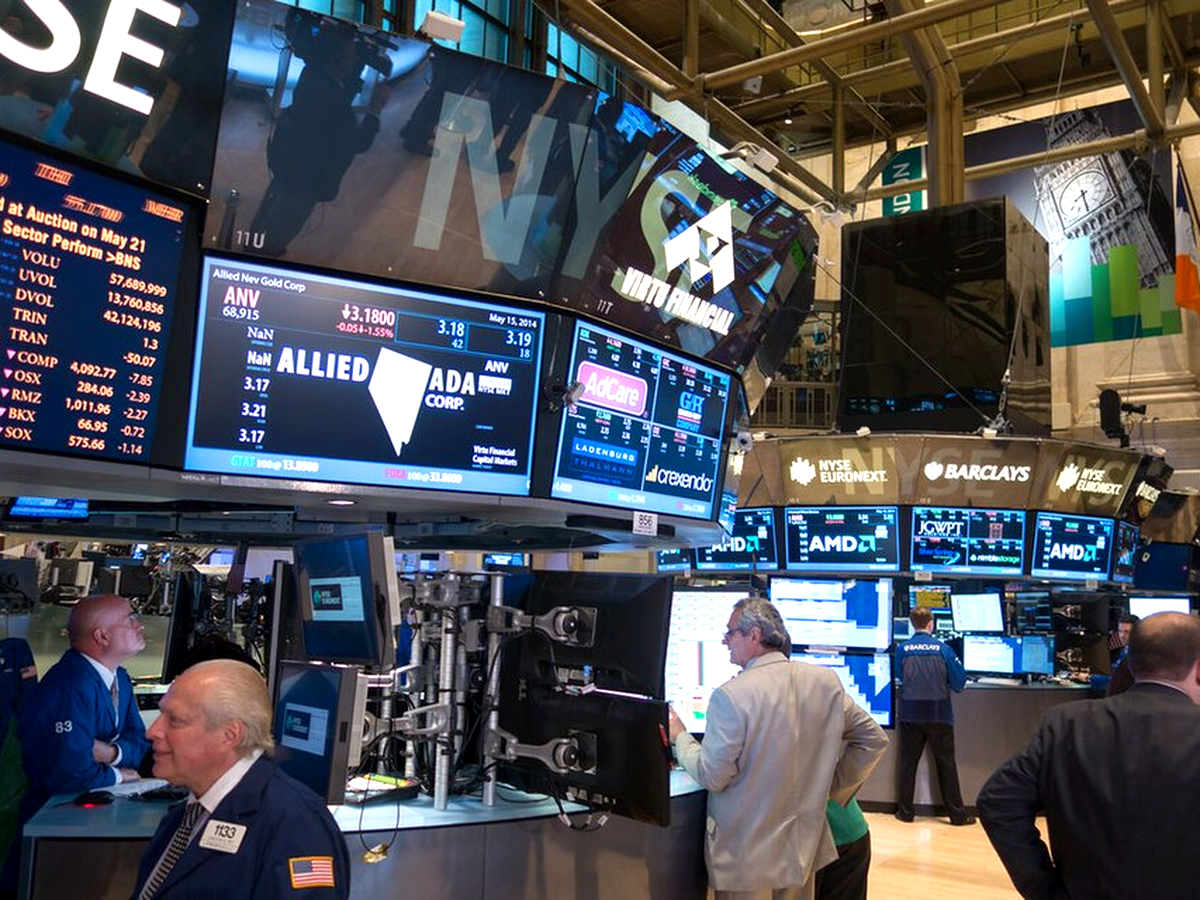
Manual trading means a human reads the market, forms a thesis, and places trades based on their own analysis — whether that's chart reading, macro awareness, or years of pattern recognition built through experience. Some manual traders are fully discretionary; others follow systematic rules but execute by hand.
The approach has a long track record. Many of the most respected traders in history built durable edges through disciplined, human-driven analysis. Manual trading offers flexibility, contextual judgment, and the ability to factor in qualitative information that no algorithm captures perfectly.
The downsides are equally well-documented: emotional bias, inconsistent execution, fatigue, and the time required to stay sharp across multiple markets simultaneously.
Head-to-Head: AI vs Manual Trading {#head-to-head}
Speed and Execution {#speed-and-execution}
AI wins this one clearly. Automated systems can scan hundreds of instruments, identify setups, and act in milliseconds. A manual trader watching three charts can't match that throughput.
For strategies that depend on precise entry timing — Bollinger Band Breakouts, MACD crossovers — the speed gap is meaningful. A human seeing the same signal will almost always enter later, and that delay affects the risk-reward on the trade.
Emotional Discipline {#emotional-discipline}
This is AI's most consistent structural advantage. Fear and greed aren't bugs in human psychology — they're features. But in trading, they're destructive. A manual trader who's taken three losses in a row will often deviate from their plan. An AI bot doesn't.
Research into trading behavior consistently points to emotional decision-making as one of the primary drivers of retail underperformance. AI systems remove that variable entirely.
Strategy Consistency {#strategy-consistency}
AI executes the same strategy the same way, every time. If the rules say enter when ADX crosses 25 with a confirming trend, the bot enters — no second-guessing, no "this one feels different."
Manual traders, even disciplined ones, introduce variation. Sometimes that variation is valuable. Often it's costly.
Adaptability and Judgment {#adaptability-and-judgment}
Here, manual trading has a genuine edge. An experienced trader can recognize when market conditions have shifted in ways that make a previously reliable setup less trustworthy. They can read central bank commentary, weigh geopolitical risk, or notice that a pattern is forming in unusually thin volume.
Rule-based AI systems can be slow to adapt when market regimes change. A strategy that performed well in trending conditions may keep firing signals in choppy markets, generating losses until the model is retrained or the rules are updated.
Time Commitment {#time-commitment}
Serious discretionary traders spend hours each day on analysis, journaling, and review. For traders who also hold full-time jobs, that time pressure creates real performance drag.
AI systems run continuously without constant oversight. For traders who want market exposure without dedicating their entire schedule to it, that's a practical advantage worth taking seriously.
Where AI Trading Has a Clear Edge {#where-ai-has-the-edge}
- Systematic and rule-based strategies: Any approach that depends on fast, consistent execution favors automation.
- Multi-market coverage: Monitoring Forex, Crypto, Commodities, and Equities simultaneously isn't realistic for a single manual trader. AI handles it.
- Backtesting and simulation: AI platforms can run thousands of historical simulations to stress-test a strategy before real capital is at risk. Manual traders rarely backtest with the same rigor or volume.
- Removing emotional bias: Consistent rule-following is structurally easier for a machine than a human.
- 24/7 markets: Crypto never closes. A manual trader sleeps. An AI system doesn't.
Where Manual Trading Still Holds Up {#where-manual-still-holds-up}
- Macro and qualitative analysis: Earnings surprises, policy shifts, and geopolitical events require contextual interpretation that current AI models handle inconsistently.
- Unusual or low-liquidity conditions: Automated systems can misfire badly in thin markets or during black swan events. A human can pause, reassess, and step aside.
- Strategy development: The best trading strategies often originate from human insight before being systematized. Traders who understand market structure deeply are better positioned to build or evaluate AI strategies.
- Discretionary edges in specific niches: Some traders have developed genuine, repeatable edges in specific instruments or setups that are difficult to codify without losing what makes them work.
A Third Option: AI-Assisted Trading {#third-option}
For many retail traders in 2026, the most practical path isn't pure automation or pure discretion — it's using AI as an intelligence layer while keeping the final decision in your hands.
That's the model Trader.AI is built around. Rather than handing execution to a black box, you explore AI-powered strategies through the leaderboard, review historical simulation data for bots like Revenant-0x00 (Bollinger Band Breakout on Crypto, +12.9% simulated cumulative return) or Havoc-0xAA (Multi-Timeframe Confirmation on Commodities, +7.4%), and use those insights to inform your own analysis.
The analysis is automated. The decisions are yours.
This approach addresses the two biggest complaints about both pure AI trading and pure manual trading. You get data-backed strategy discovery without the time cost of manual backtesting. And you avoid the opacity of black-box signals that give you no insight into why a trade is being flagged.
For traders skeptical of handing control to an algorithm, this middle path is worth examining seriously. All performance figures on Trader.AI are based on historical simulations — past performance is not indicative of future results — but having transparent, documented strategy data is meaningfully better than acting on gut feel alone.
FAQs {#faqs}
Does AI trading actually outperform manual trading?
There's no universal answer. AI tends to outperform in systematic, rule-based strategies where speed and consistency matter. Manual trading can outperform in environments that require contextual judgment, macro interpretation, or rapid adaptation to unusual conditions. The comparison also depends heavily on the specific strategy, market, and timeframe.
Is AI trading safe for retail traders?
AI trading carries the same market risks as any other approach. Automated systems can generate losses, particularly during regime changes or black swan events. Retail traders should evaluate any AI strategy using historical simulation data and apply appropriate risk management. Past performance from simulations is not indicative of future results.
Do I need coding skills to use AI trading tools?
Not necessarily. Platforms like Trader.AI are built for analytical traders, not developers. You can explore strategy profiles, review backtested performance data, and evaluate AI models without writing a single line of code.
What AI models power trading bots in 2026?
Several capable models are now being applied to trading strategy. Trader.AI's roster includes bots powered by GPT-5.2, DeepSeek Reasoner, and MiniMax-M2.1 — each running distinct strategy types across different markets and asset classes.
Can I use AI trading signals without giving up control of my trades?
Yes. Intelligence platforms are designed to inform your decisions, not make them for you. On Trader.AI, you review strategy data and historical simulation results, then decide how to act. The platform does not execute trades on your behalf.
What strategies do AI trading bots typically use?
Common strategy types include Bollinger Band Breakout, MACD Trend, ADX Trend Strength, Candlestick Pattern Recognition, and Multi-Timeframe Confirmation — established technical analysis methods applied systematically by AI models rather than discretionary human judgment.
How is AI-assisted trading different from copy trading?
Copy trading platforms like eToro rely on human signal providers whose trades you mirror. AI-assisted trading uses algorithmic models to generate strategy signals based on defined, documented rules — not another person's discretionary decisions. On platforms like Trader.AI, you also retain full control over whether and how to act on the intelligence provided.
Final Thoughts {#final-thoughts}
AI trading and manual trading aren't opposites that force you to pick a side. They're tools with different strengths, and the traders who perform best in 2026 tend to understand both.
If you're spending hours manually backtesting strategies or making calls without data to back them up, there's a more efficient path. Exploring AI strategy intelligence, reviewing documented simulation performance, and using that analysis to sharpen your own decisions is a practical upgrade — not a surrender of control.
Explore AI trading strategies across Forex, Crypto, Commodities, and Equities at trader.ai.
All performance metrics referenced in this article are based on historical simulations. Past performance is not indicative of future results. Trading involves risk.