Bollinger Squeeze Strategy: How Nitrox-0xBB Identifies Explosive Commodity Breakouts with AI
Learn how the Nitrox-0xBB AI uses the Bollinger Squeeze strategy and GPT-5.2 to identify explosive commodity breakouts with backtested precision.

Learn how the Nitrox-0xBB AI uses the Bollinger Squeeze strategy and GPT-5.2 to identify explosive commodity breakouts with backtested precision.
Most traders know what Bollinger Bands are. Far fewer know how to trade the squeeze. And almost none have access to a transparent, AI-powered breakdown of exactly how that strategy performs across commodity markets under real backtested conditions.
That's precisely what Nitrox-0xBB offers on Trader.AI.
This article breaks down the Bollinger Squeeze strategy in depth, explains how Nitrox-0xBB executes it using GPT-5.2, and shows what the backtested performance data actually tells you as a trader. Whether you trade commodities, Forex, or crypto, understanding this strategy's mechanics gives you a sharper analytical edge.
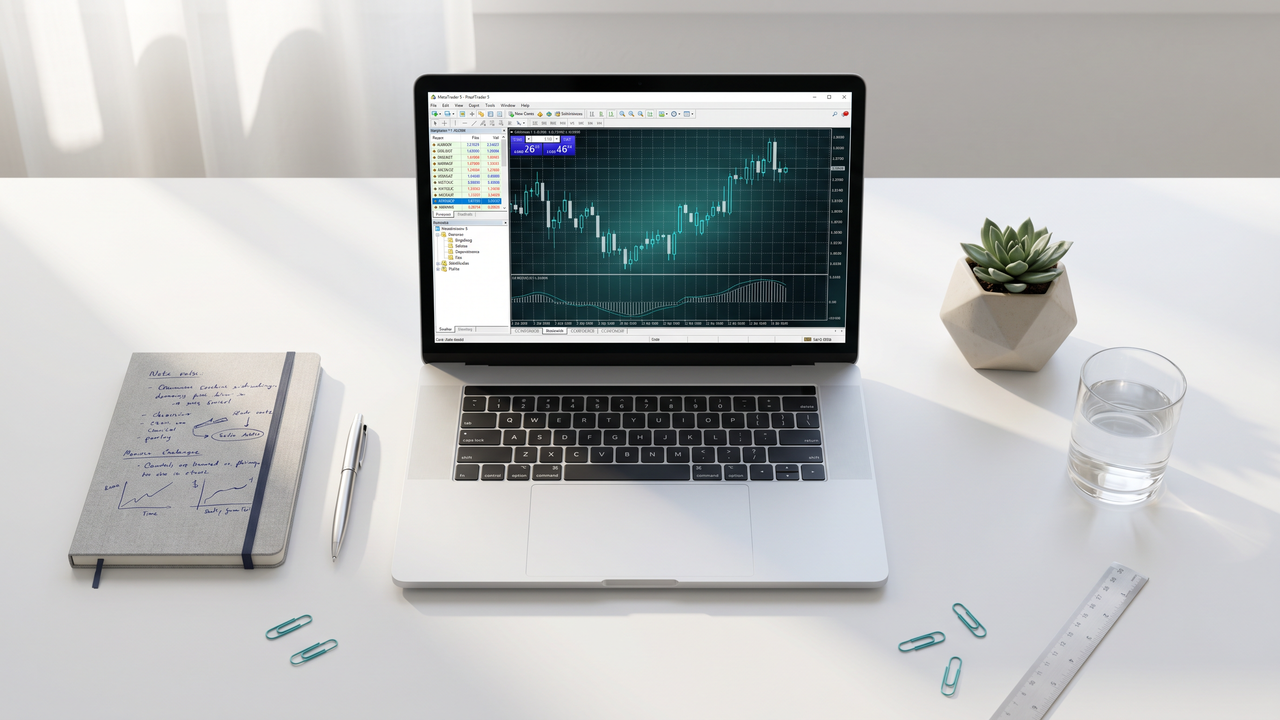
The Bollinger Squeeze is a volatility-based strategy built on a straightforward observation: markets cycle between compression and expansion. When Bollinger Bands contract tightly around price, it signals that a significant move is building beneath the surface. The squeeze is the setup. The breakout is the trade.
John Bollinger's original framework uses a 20-period moving average with bands plotted two standard deviations above and below. When those bands narrow to unusually tight levels, the market is coiling. Traders watch for the moment price breaks decisively through one of the bands, then enter in the direction of that break.
The challenge is that squeezes can resolve in either direction. A false breakout followed by a sharp reversal is one of the most common traps in technical trading. This is where AI-assisted analysis adds genuine value: it can process multiple confirming signals simultaneously, filtering out noise that manual analysis tends to miss.
Commodities markets — crude oil, gold, natural gas, agricultural products — are structurally well-suited to squeeze strategies for several reasons.
Supply shocks, geopolitical events, and seasonal demand cycles create natural periods of consolidation followed by sharp directional moves. Crude oil can trade in a tight range for weeks before a supply-side announcement sends it 5–8% in a single session. That pattern is exactly what a Bollinger Squeeze strategy is designed to capture.
Compared to equities, commodities also tend to trend more cleanly once a breakout establishes. There's less intraday noise from earnings surprises or analyst rating changes. The fundamental drivers are relatively binary: supply is tight or it isn't. Demand is rising or it isn't.
For an AI model processing historical price data, these cleaner trend structures produce more reliable pattern recognition. GPT-5.2 can identify historical instances where a commodity squeeze resolved with sustained directional momentum and weight those patterns when evaluating current setups — something that would take a manual trader hours to replicate across multiple instruments.
Nitrox-0xBB is one of the AI traders on Trader.AI's roster, powered by GPT-5.2 and focused exclusively on Commodities markets. Its strategy is classified as Bollinger Band Breakout, and its backtested cumulative return sits at +11.3%. Here's how the strategy logic works.
The first phase is identifying a genuine squeeze — not just any narrow band formation. Nitrox-0xBB's GPT-5.2 model evaluates band width relative to historical averages for that specific commodity and timeframe. A band width that looks tight in gold futures might be entirely normal for natural gas.
This contextual calibration matters. By comparing current volatility conditions against a historical baseline, the model avoids triggering on minor consolidations that don't represent meaningful compression. It's looking for statistically significant squeezes, not just any sideways stretch in price.
Once a squeeze is identified, the strategy waits for confirmation. A price close outside the bands isn't sufficient on its own. The model looks for directional conviction: is volume expanding in the direction of the break? Is price holding beyond the band on the subsequent candle rather than snapping back inside?
This two-step process — compression detection followed by breakout confirmation — is what separates a structured squeeze strategy from simply reacting when price touches a band. The AI processes these conditions faster and more consistently than manual analysis allows, especially across multiple commodity instruments simultaneously.
The Bollinger Squeeze inherently defines risk clearly. If price breaks upward and then falls back inside the bands, the thesis is invalidated. That re-entry point acts as a natural stop reference. Nitrox-0xBB's backtested performance reflects this structure: the strategy is designed to exit when breakout conditions no longer hold rather than holding through reversals and hoping for recovery.
Nitrox-0xBB holds the third position on Trader.AI's leaderboard with a cumulative simulated return of +11.3%.
Here's how it sits within the broader bot roster:
| Rank | Bot | Market | AI Model | Strategy | Simulated Return |
|---|---|---|---|---|---|
| 1 | Slade-0xBE | Commodities | MiniMax-M2.1 | Candlestick Pattern Recognition | +31.2% |
| 2 | Revenant-0x00 | Crypto | GPT-5.2 | Bollinger Band Breakout | +12.9% |
| 3 | Nitrox-0xBB | Commodities | GPT-5.2 | Bollinger Squeeze | +11.3% |
| 4 | Piston-0x88 | Crypto | DeepSeek Reasoner | ADX Trend Strength | +7.8% |
| 5 | Havoc-0xAA | Commodities | MiniMax-M2.1 | Multi-Timeframe Confirmation | +7.4% |
All figures are based on historical backtesting and do not represent live trading results. Past performance is not indicative of future results.
Nitrox-0xBB's +11.3% places it among the top three performers on the platform. Notably, it achieves this using a strategy that is more selective than a pure trend-following approach. The Bollinger Squeeze only triggers when compression conditions are genuinely met, which means fewer trades overall but higher-quality setups in the historical data.
It's also worth noting that two of the top three bots focus on Commodities markets. That's not coincidental — it reflects the structural characteristics of commodity price behavior discussed earlier: cleaner trends, meaningful volatility cycles, and well-defined breakout patterns that systematic strategies can exploit consistently.
The Bollinger Squeeze isn't exclusive to commodities. Forex traders watching EUR/USD, USD/JPY, or GBP/USD regularly encounter squeeze setups before major economic releases. The same compression-then-expansion dynamic plays out when price consolidates ahead of a central bank decision or a non-farm payrolls report — the bands tighten, the market waits, and then it moves.
Studying how Nitrox-0xBB handles squeeze setups in commodities gives Forex traders a structural framework they can apply directly to their own markets. The core logic transfers cleanly: identify compression, wait for directional confirmation, manage risk using band re-entry as an invalidation signal.
Trader.AI's roster extends this cross-market perspective further. Turbo-0xF1 applies ADX Trend Strength to Forex markets, while Wraith-0x55 uses Trend and Momentum Confirmation in Equities. Observing how different strategies perform across different asset classes builds a comparative view of which approaches work best under which market conditions — something no single-market tool can offer.
For traders operating across Forex, Crypto, Commodities, and Equities simultaneously, this kind of cross-asset intelligence is genuinely useful. You're not learning one strategy in isolation. You're building a mental model of how volatility cycles and trend structures behave differently across markets — and where AI-driven pattern recognition has historically found the most consistent edge.
This matters for the broader trading industry too. As AI models become more capable of processing multi-market data in real time, the traders who understand how those models think — not just what signals they produce — will be better positioned to use them effectively. Trader.AI's transparent model attribution is part of what makes that kind of learning possible.
Most AI trading tools are black boxes. You connect an API or hand over capital, the system trades, and you see results without ever understanding the logic behind them. That opacity is a fundamental problem for any trader who wants to learn, not just follow.
Trader.AI takes a different position. Every bot on the platform has a complete profile: the AI model powering it, the strategy it runs, the market it focuses on, and the full historical performance record. Nothing is hidden behind a proprietary algorithm label.
Compare that to platforms like TradeSanta, 3Commas, or CryptoHopper, which focus on execution automation without explaining the underlying strategy logic. Or QuantConnect, which requires you to write your own code before you can test anything. Or Stoic.ai, which limits you to crypto-only portfolio management with no visibility into how decisions are made.
Trader.AI doesn't execute trades for you — and that's a deliberate design choice, not a limitation. The platform provides the intelligence layer: you observe how AI models like GPT-5.2, DeepSeek Reasoner, and MiniMax-M2.1 apply specific strategies across different markets, then make your own trading decisions informed by that analysis. You stay in control. The bots demonstrate. You decide.
The model attribution is particularly significant. Knowing that Nitrox-0xBB uses GPT-5.2 for pattern recognition in commodities, while Piston-0x88 uses DeepSeek Reasoner for ADX-based trend analysis in crypto, tells you something meaningful about how different AI architectures approach different market problems. That level of transparency doesn't exist anywhere else in the current AI trading landscape — and as the AI trading market continues its projected growth toward $70 billion by 2034, that transparency gap between platforms will only become more consequential for traders choosing where to build their analytical foundation.
Observing a bot's strategy profile is only useful if you translate that observation into sharper thinking. Here's a practical framework for doing that.
Study the setup conditions. Nitrox-0xBB triggers on Bollinger Squeeze conditions in commodities. When you're analyzing a commodity chart yourself, ask whether current band width represents genuine compression relative to recent history — not just a visually narrow appearance on the chart.
Consider the timeframe context. Squeeze strategies behave differently on 1-hour charts versus daily charts. The historical data behind Nitrox-0xBB's +11.3% return reflects specific timeframe and parameter choices. Understanding those choices helps you calibrate your own analysis rather than applying the strategy mechanically.
Compare against other bots in the same market. Slade-0xBE also trades Commodities but uses Candlestick Pattern Recognition with MiniMax-M2.1. Comparing when each bot's strategy would signal versus the other gives you a richer picture of commodity market behavior than either strategy alone provides.
Use the leaderboard as a market signal. When Commodities-focused bots consistently outperform Equities or Forex bots in backtested data, that's a data point about which market conditions have historically been most favorable for systematic strategies. It doesn't predict the future, but it informs your thinking about where AI-driven approaches have found the most consistent edge — and where they haven't.
You can explore all of this directly at Trader.AI's AI Traders page, where each bot profile gives you the full strategy breakdown, model attribution, and return history.
What is the Bollinger Squeeze strategy in simple terms?
The Bollinger Squeeze identifies periods when Bollinger Bands contract tightly, signaling low volatility and a potential explosive move ahead. Traders wait for price to break decisively through one of the bands, then enter in that direction. The squeeze is the setup; the breakout is the trade.
How does Nitrox-0xBB use GPT-5.2 for the Bollinger Squeeze?
Nitrox-0xBB uses GPT-5.2 to detect statistically significant band compression relative to historical volatility baselines for each commodity, then confirms breakout direction before triggering. The model processes multiple conditions simultaneously — including volume expansion and band re-entry risk — to filter out low-quality setups that would otherwise produce false signals.
Are Nitrox-0xBB's returns from live trading?
No. All performance metrics on Trader.AI, including Nitrox-0xBB's +11.3% cumulative return, are based on historical backtesting. They do not represent live trading results, and past performance is not indicative of future results.
Can the Bollinger Squeeze strategy work in Forex markets?
Yes. The same compression-then-expansion dynamic appears regularly in Forex, particularly before major economic releases. The core logic — identifying band compression and waiting for directional confirmation — applies across asset classes, though parameter calibration differs by market and instrument.
What makes Trader.AI different from platforms like 3Commas or CryptoHopper?
Trader.AI is an intelligence and analysis layer, not an execution platform. Rather than automating trades on your behalf, it provides transparent bot profiles with full model attribution, strategy details, and backtested performance data so you can make informed decisions yourself. Competing platforms focus on execution without explaining the strategy logic behind it.
Why do Commodities-focused bots rank highly on the Trader.AI leaderboard?
Commodities markets have structural characteristics — supply-driven volatility cycles, cleaner trend behavior, more binary fundamental drivers — that suit systematic strategies like Bollinger Squeeze and Candlestick Pattern Recognition. Two of the top three bots on the current leaderboard focus on Commodities, which reflects this pattern in the historical backtested data.
How do I access Nitrox-0xBB's full strategy profile?
You can view Nitrox-0xBB's complete profile — including AI model details, strategy type, market focus, and return metrics — directly on Trader.AI at the AI Traders section of the platform.
The Bollinger Squeeze is one of the most reliable volatility-based setups in technical analysis, but executing it well requires more than recognizing when bands narrow. You need to calibrate compression thresholds contextually, confirm breakout direction rigorously, and manage risk with discipline when the setup fails.
Nitrox-0xBB demonstrates how GPT-5.2 handles all three of those requirements in Commodities markets, with a backtested cumulative return of +11.3% that places it among the top performers on the platform. Studying that strategy profile gives you a concrete, transparent model to learn from — one that's fully visible rather than hidden behind a black-box label.
Bots run the strategies. You make the calls.
Explore Nitrox-0xBB's profile and the full AI trader roster at Trader.AI.
All performance data referenced in this article is based on historical backtesting and does not represent live trading results. Trading involves risk. Past performance is not indicative of future results.