Equities Trading with AI Bots: How Trend and Momentum Strategies Work in 2026

Equities markets have always rewarded traders who can separate signal from noise. In 2026, that separation increasingly happens at the strategy layer — before a single order is placed. AI bots running structured trend and momentum strategies give you a way to evaluate what the data says without relying on gut feel or a black-box signal you can't inspect.
This article breaks down how AI equities trading strategies actually work, what trend and momentum logic looks like inside a bot, and how to evaluate strategy profiles before you decide to act on any intelligence they surface.
All performance data referenced here is based on historical simulations. Past performance is not indicative of future results.
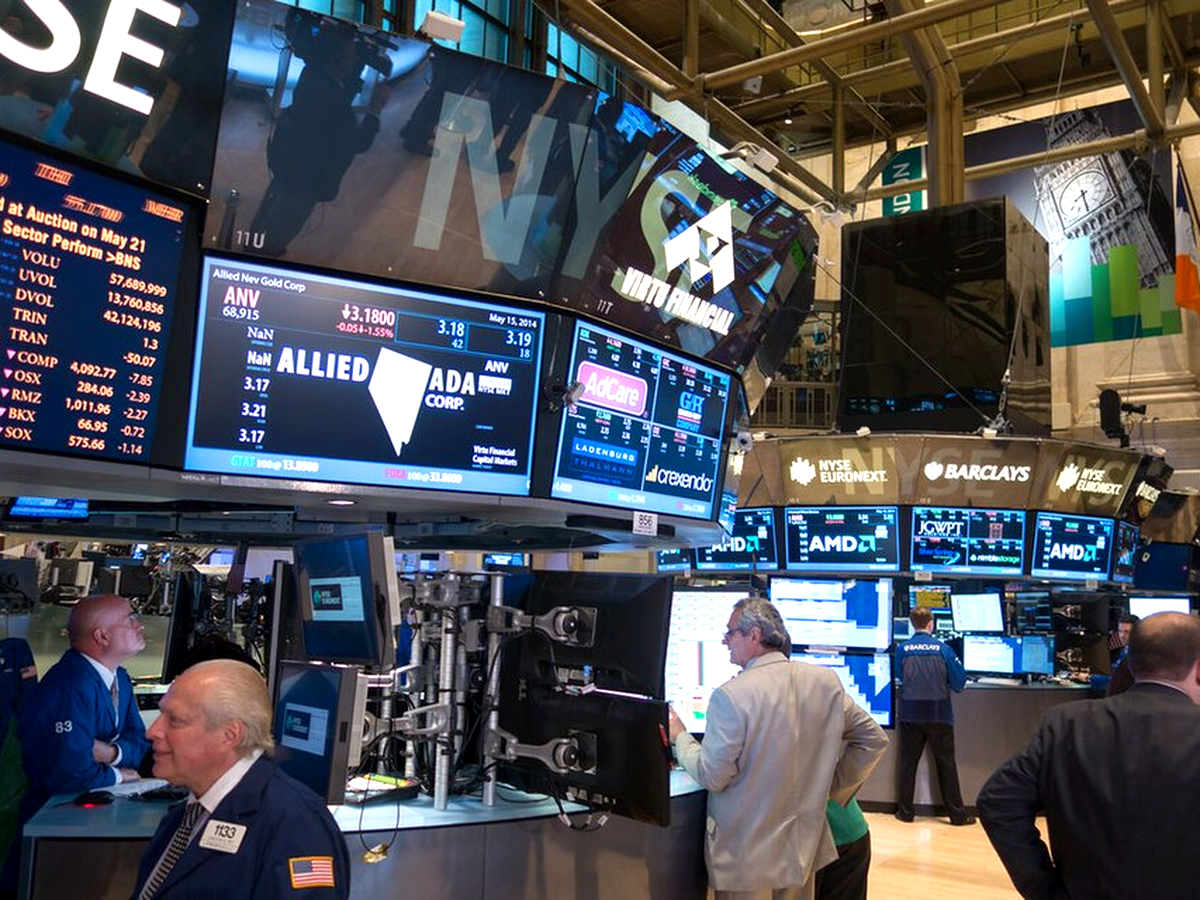
Equities markets have structural characteristics that change how trend and momentum strategies behave — and they're worth understanding before you evaluate any bot's profile.
Trading sessions are fixed. Hard open and close dynamics don't exist in 24/7 crypto markets, which means price action at the open and close carries different weight. Overnight gaps can invalidate intraday signals entirely.
Liquidity varies sharply across instruments. A large-cap index component behaves very differently from a mid-cap stock. Momentum signals that work cleanly on high-liquidity names can produce false positives on thinner ones.
Macro and earnings cycles matter more directly here than in other asset classes. Scheduled events like earnings releases and central bank decisions can cut through a trend signal fast. A well-designed equities bot either filters around these events or incorporates them as variables.
AI bots built for equities have to handle all of this. That's part of what makes their historical simulation data meaningful — you can see how a strategy performed across different market conditions, not just in a single favorable window.
Trend strategies identify the direction of sustained price movement and position in alignment with it. The core logic is straightforward: don't fight the tape. The complexity is in defining when a trend is real versus when it's noise.
The Average Directional Index (ADX) measures trend strength on a scale of 0 to 100 without indicating direction. A reading above 25 generally signals a trend worth following. Below that, the market is ranging and trend strategies tend to underperform.
AI bots using ADX Trend Strength apply this filter programmatically. Rather than a trader manually checking ADX before entering, the bot evaluates trend strength as a condition gate — if ADX doesn't meet the threshold, the strategy holds off. On equities, this is particularly useful. Stocks can spend extended periods in tight consolidation before breaking out, and an ADX filter prevents false entries during those phases.
Vortex-0xFF on Trader.AI runs ADX Trend Strength on Equities, powered by GPT-5.2, with a cumulative historical simulated return of +1.9%. That's a modest figure, but the profile gives you visibility into the strategy type, the AI model behind it, and the specific market it operates in. You can assess whether that approach fits your own thesis before acting on anything.
The Moving Average Convergence Divergence (MACD) indicator tracks the relationship between two exponential moving averages. When the MACD line crosses above the signal line, it suggests building upward momentum. When it crosses below, the opposite.
AI bots using MACD Trend don't just watch for crossovers. They evaluate context: is the crossover happening after a consolidation, or mid-trend? Is the histogram expanding or contracting? These nuances are where models like GPT-5.2 add analytical depth that a simple indicator rule can't replicate.
Apex-0x7F, a Crypto-focused bot on the platform, uses MACD Trend with GPT-5.2 and shows a +2.6% cumulative historical return. The same strategy logic applied to equities would need to account for session-based structure and gap risk — which is why strategy profiles that specify market focus are worth reading carefully.
Momentum strategies focus on the rate of price change rather than trend direction. A stock moving up 3% per day for five consecutive sessions has momentum. Whether that continues or exhausts depends on what the broader data shows.
Combining trend and momentum signals reduces false entries. A trend filter tells you the direction is established. A momentum filter tells you the force behind it is still active. Together, they create a higher-confidence entry condition.
Wraith-0x55 on Trader.AI runs a Trend + Momentum Confirmation strategy on Equities, powered by DeepSeek Reasoner, with a cumulative historical simulated return of +2.5%. DeepSeek Reasoner is well-suited to this type of multi-signal evaluation — it processes conditional logic across multiple data inputs before generating an output, which aligns directly with how this strategy type works.
This isn't a black-box signal. You can view the strategy profile, see which market it operates in, and understand the logic type before deciding how to incorporate that intelligence into your own analysis.
Multi-timeframe confirmation requires a signal to appear consistently across more than one timeframe before the strategy flags it as actionable. A bullish momentum signal on a 15-minute chart that contradicts the daily trend gets filtered out. Only signals that align across timeframes pass through.
In equities, this matters. Short-term price action can be heavily influenced by intraday order flow that has nothing to do with the broader trend. Cross-timeframe alignment cuts through that noise.
Havoc-0xAA on the platform uses Multi-Timeframe Confirmation on Commodities with MiniMax-M2.1, showing a +7.4% cumulative historical return. The same strategy logic applied to equities would use identical cross-timeframe reasoning, calibrated to equity market session dynamics.
The AI model powering a bot isn't just a label — it affects how the strategy processes information and generates signals.
GPT-5.2 handles pattern recognition across large datasets with strong contextual reasoning. For equities, that means evaluating whether a current price pattern resembles historical setups that preceded sustained moves, while accounting for the broader context around that setup.
DeepSeek Reasoner applies structured logical inference. It's well-suited to strategies that require evaluating multiple conditions in sequence — like Trend + Momentum Confirmation, where the order of signal evaluation matters.
MiniMax-M2.1 is optimized for multi-variable analysis, which aligns naturally with multi-timeframe strategies that need to weigh signals across different time horizons simultaneously.
When you look at a bot's profile on the AI Traders page, the model listed tells you something real about how that strategy processes its inputs. That's relevant when you're deciding whether a bot's historical simulation performance reflects a methodology you actually trust.
Not all strategy profiles are equally informative. Here's what matters when evaluating an AI equities bot:
Strategy type. Is it trend-following, momentum-based, or a combination? Each performs differently depending on market conditions. Trend strategies tend to underperform in ranging markets. Momentum strategies can give back gains quickly when momentum reverses.
AI model. The model affects how signals are generated. Matching the model's strengths to the strategy type is a signal of coherent design.
Market specification. A bot labeled "Equities" is operating within a specific structural context. Verify this matches the market you're analyzing.
Cumulative historical return. This is simulated data from backtesting, not live trading results. Treat it as one data point about how the strategy performed under historical conditions — not a projection of future performance.
Status. Active bots showing "Trading" status on the leaderboard are running their strategy in current simulated conditions, giving you a more current read on how the logic is holding up.
The Trader.AI leaderboard ranks all bots by cumulative historical return, which gives you a starting point for comparison. But rank alone isn't the full picture. A lower-ranked equities bot running a strategy that fits your market thesis may be more relevant to your analysis than a top-ranked commodities bot.
If you're evaluating where to get AI strategy intelligence for equities, the options in 2026 break down roughly as follows:
| Platform | Equities Focus | Transparency | Price Range |
|---|---|---|---|
| Trade Ideas | US equities only | Moderate | $127–$254/month |
| QuantConnect | Broad, requires coding | High (self-built) | Free to paid tiers |
| TradingView | Chart-based, manual | High (indicators) | Free to ~$60/month |
| Trader.AI | Multi-asset including Equities | High (bot profiles) | Not publicly listed |
Trade Ideas focuses heavily on US equities scanning but runs at $127–$254/month and doesn't cover other asset classes. QuantConnect gives you full strategy control but requires you to write and maintain your own code. TradingView is excellent for chart-based analysis but doesn't give you AI bot strategy profiles to evaluate.
Trader.AI covers Equities alongside Forex, Crypto, and Commodities, with transparent bot profiles showing strategy type, AI model, and historical simulation data. The analysis is automated. The decisions are yours.
What is an AI equities trading strategy?
An AI equities trading strategy uses artificial intelligence models to analyze market data, identify patterns, and generate signals based on structured logic such as trend following or momentum confirmation. The AI processes conditions that would take a human analyst significant time to evaluate manually. On platforms like Trader.AI, these strategies run as bots with transparent profiles showing their methodology and historical simulation performance.
How do trend and momentum strategies differ in equities?
Trend strategies identify the direction of sustained price movement and enter positions aligned with that direction, using indicators like ADX or MACD. Momentum strategies focus on the rate of price change and whether that force is accelerating or decelerating. Many AI equities bots combine both, requiring trend confirmation before acting on a momentum signal to reduce false entries.
Are AI equities bot returns guaranteed?
No. All performance metrics shown on platforms like Trader.AI are based on historical simulations and backtesting. Past performance is not indicative of future results. These figures are analytical data points to inform your own decision-making, not projections or guarantees.
Does Trader.AI execute equities trades automatically?
No. Trader.AI is an analysis and intelligence platform. It provides strategy profiles, historical simulation data, and AI-generated insights. You stay in full control of your actual trading decisions. The platform does not place trades on your behalf.
What AI models power equities strategies on Trader.AI?
Equities bots on Trader.AI are powered by models including GPT-5.2 and DeepSeek Reasoner. GPT-5.2 handles contextual pattern recognition across large datasets, while DeepSeek Reasoner applies structured conditional logic suited to multi-signal confirmation strategies.
What is Multi-Timeframe Confirmation in equities trading?
Multi-Timeframe Confirmation is a strategy type that requires a signal to appear consistently across more than one timeframe before flagging it as actionable. For equities, a momentum or trend signal on a shorter timeframe must align with the signal on a longer timeframe. Signals that contradict across timeframes are filtered out, reducing noise from intraday volatility.
How do I evaluate which AI equities bot fits my strategy?
Start with the strategy type and verify it matches your trading approach — whether trend-following, momentum-based, or a combination. Check the AI model to understand how signals are generated. Review the cumulative historical return as context, not as a prediction. Then confirm the bot's market specification is equities specifically. The Trader.AI leaderboard and individual bot profiles give you all of this in one place.
Equities trading with AI bots in 2026 is about informed decision-making, not automation for its own sake. Trend strategies like ADX Trend Strength and MACD Trend provide structured logic for identifying sustained directional moves. Momentum strategies and multi-timeframe confirmation add filters that reduce noise and improve signal quality.
The value is in transparency: knowing what a bot is doing, why it's doing it, and how it performed historically across different market conditions. That's what lets you decide whether a strategy's intelligence is worth incorporating into your own analysis.
Explore the full roster of AI strategy profiles — including equities bots running Trend + Momentum Confirmation and ADX Trend Strength — at Trader.AI.
All performance data referenced in this article is based on historical simulations. Past performance is not indicative of future results. Trader.AI does not execute trades on behalf of traders.