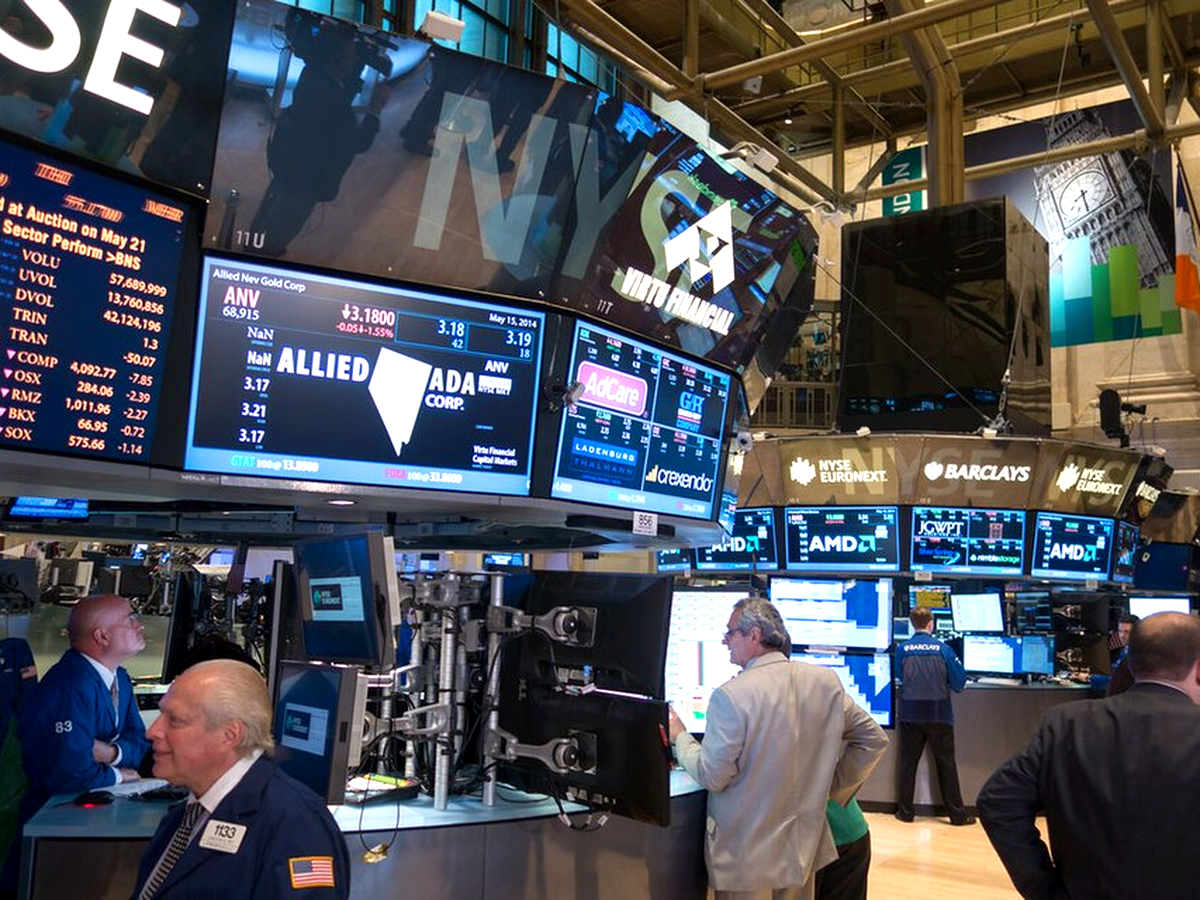
How to Trade Gold CFDs Online: XAU/USD Strategy Guide for 2026
Learn how to trade gold CFDs with our XAU/USD strategy guide for 2026, covering market drivers, risk management, and effective trading techniques.


Learn how to trade gold CFDs with our XAU/USD strategy guide for 2026, covering market drivers, risk management, and effective trading techniques.
Gold is one of the most actively traded instruments in the world — and for good reason. It reacts to macroeconomic data, central bank decisions, geopolitical shocks, and currency moves, sometimes all at once. For active traders, that volatility is the point.
Trading gold as a CFD gives you direct price exposure without touching physical bullion. No storage. No delivery. You go long or short, apply leverage, and control your position size precisely. For scalpers and day traders, XAU/USD is a natural fit.
This guide covers what drives gold prices, which strategies suit 2026's market environment, and how to structure your trades with the right conditions behind you.
A CFD — Contract for Difference — is an agreement between you and your broker to exchange the difference in an asset's price from when you open a position to when you close it. With a gold CFD, you're speculating on gold's price, typically quoted as XAU/USD, without ever holding physical metal.
If the price moves your way, you profit. If it moves against you, you lose. How much depends on your position size and the distance the price travels.
Gold CFDs trade in lots, with one standard lot representing 100 troy ounces. Most brokers, including Spec Markets, allow minimum trade sizes of 0.01 lots — making it accessible even on a smaller account.
XAU is the ISO code for gold. USD is the US dollar. XAU/USD simply tells you how many dollars one troy ounce of gold costs.
If XAU/USD is at 2,350 and you buy one standard lot (100 oz), every $1 move in gold equals $100 in profit or loss. That's why position sizing matters so much here — gold moves fast, and the dollar value per pip adds up quickly.
Gold trades nearly 24 hours a day, five days a week. The most active windows are the London open (8:00–12:00 GMT) and the New York open (13:00–17:00 GMT). Volatility tends to spike around US economic releases — CPI, NFP, and Fed announcements in particular.
Knowing what drives XAU/USD helps you time entries better and avoid getting caught on the wrong side of a macro move.
Gold and the dollar move in opposite directions most of the time. When the dollar strengthens, gold typically pulls back — and vice versa. The DXY (US Dollar Index) is worth watching as a leading signal. A sharp DXY rally often precedes a drop in XAU/USD.
Gold pays no yield. When real interest rates — nominal rates minus inflation — rise, the opportunity cost of holding gold goes up and prices tend to fall. When real yields drop or turn negative, gold becomes more attractive. Fed decisions and US Treasury yields are the two numbers that matter most here.
Gold is a classic safe-haven asset. When risk sentiment deteriorates — armed conflict, financial instability, banking stress — traders rotate into gold. These moves can be fast and sharp. In 2026, persistent macro uncertainty continues to generate periodic safe-haven spikes in XAU/USD.
Gold has long been used as an inflation hedge. When inflation expectations climb and central banks look likely to fall behind the curve, gold tends to benefit. Watch US CPI prints and breakeven inflation rates from the Treasury market.
No single approach works in every market condition. Here are three strategies that suit different styles and time horizons.
Gold trends well over weeks and months. On the daily chart, use the 50-period and 200-period moving averages to identify the prevailing direction — then only trade with it.
This suits swing traders who check charts once or twice a day and are comfortable holding positions for several days.
Between the New York close and the London open — roughly 22:00–07:00 GMT — gold often consolidates within a defined range. Identify support and resistance on the 1-hour or 4-hour chart and trade the boundaries.
High-impact US releases — NFP, CPI, FOMC decisions — create sharp, fast moves in XAU/USD. Scalpers can capture 20–50 pips in minutes when positioned correctly.
Ready to trade XAU/USD with spreads from 0.0 pips and execution in 0.028 seconds? Open a Live Account at Spec Markets and start trading gold CFDs today.
Gold is volatile. A single news event can move XAU/USD 50–100 pips in seconds. Risk management isn't optional — it's what separates traders who last from those who don't.
Position sizing. Risk no more than 1–2% of your account on any single trade. Use the Spec Markets calculator to work out your lot size based on your stop distance and account balance before you enter — not after.
Stop losses. Set one on every trade. No exceptions. Gold gaps are rare but they do happen, especially over weekends or around major geopolitical events.
Leverage awareness. Spec Markets offers leverage up to 1000:1. That amplifies both gains and losses. Most experienced gold traders use a fraction of the maximum available. Base your position size on the dollar risk per trade, not the leverage ratio.
Negative balance protection. Spec Markets' zero cut system means you can't lose more than your account balance, even in fast-moving markets. Your downside is capped at what you deposited.
Your account type affects your cost on every XAU/USD trade. It's worth getting right before you start.
| Raw Zero | Pure Spread | |
|---|---|---|
| Spread | From 0.0 pips | From 1.0 pips |
| Commission | $3.50 per lot per side | None |
| Best for | Scalpers, high-frequency traders | Swing traders, lower volume |
| Minimum deposit | $50 | $50 |
| Leverage | Up to 1000:1 | Up to 1000:1 |
If you're scalping gold and running 20+ trades a week, Raw Zero almost always works out cheaper. Spreads from 0.0 pips plus $3.50 commission per lot per side typically beats a 1.0 pip spread account once your trade volume is meaningful.
If you trade gold less frequently and hold positions for hours or days, Pure Spread keeps things simple — no commission to factor in, just the spread.
Both accounts run on MT5 with full EA support, so you can automate your gold strategy and let it run without being glued to the screen. See the full account comparison at Spec Markets.
Getting set up takes less than 10 minutes.
Want to test your gold strategy before risking real capital? Try a free demo account with live market conditions.
What is the minimum deposit to trade gold CFDs on Spec Markets?
$50 on both the Raw Zero and Pure Spread accounts. You can start trading XAU/USD with a small account and scale as your strategy develops.
What's the difference between trading gold CFDs and buying physical gold?
A gold CFD gives you price exposure without owning any metal. You can go long or short, use leverage, and exit at any time. Physical gold requires storage, insurance, and a buyer when you want out. For active traders, CFDs are far more practical.
Which account is better for scalping XAU/USD — Raw Zero or Pure Spread?
Raw Zero is almost always cheaper for scalpers. Spreads from 0.0 pips plus $3.50 commission per lot per side typically results in a lower total cost per trade than the 1.0 pip minimum on Pure Spread, particularly at higher volumes.
What leverage is available on gold CFDs at Spec Markets?
Up to 1000:1. That said, most experienced gold traders use significantly less than the maximum. Higher leverage increases both potential gains and potential losses. Always size positions based on your dollar risk per trade, not the leverage ratio available.
When is the best time to trade XAU/USD?
The most active and liquid windows are the London open (8:00–12:00 GMT) and the New York open (13:00–17:00 GMT). Volatility peaks around US economic releases — NFP, CPI, and FOMC decisions. Check Spec Markets' trading hours for exact session times.
Does Spec Markets offer negative balance protection on gold trades?
Yes. The zero cut system protects your account from going below zero, even during fast-moving markets or high-impact news events. Your maximum loss is limited to your account balance.
Can I automate a gold trading strategy on Spec Markets?
Yes. Both account types support Expert Advisors on MT5. You can build or import an automated gold strategy and run it directly from the platform without manual execution.
Trading CFDs involves significant risk of loss and is not suitable for all traders. Leverage can amplify both profits and losses. Ensure you understand the risks involved and never trade with money you cannot afford to lose. Spec Markets is a regulated broker — please review the legal documents before opening an account.