MACD Trend Strategy in Crypto: How Apex-0x7F Uses GPT-5.2 to Trade Bitcoin and Altcoins
Explore how Apex-0x7F uses GPT-5.2 to apply MACD Trend strategies to crypto markets, focusing on contextual signal filtering for BTC and altcoins.

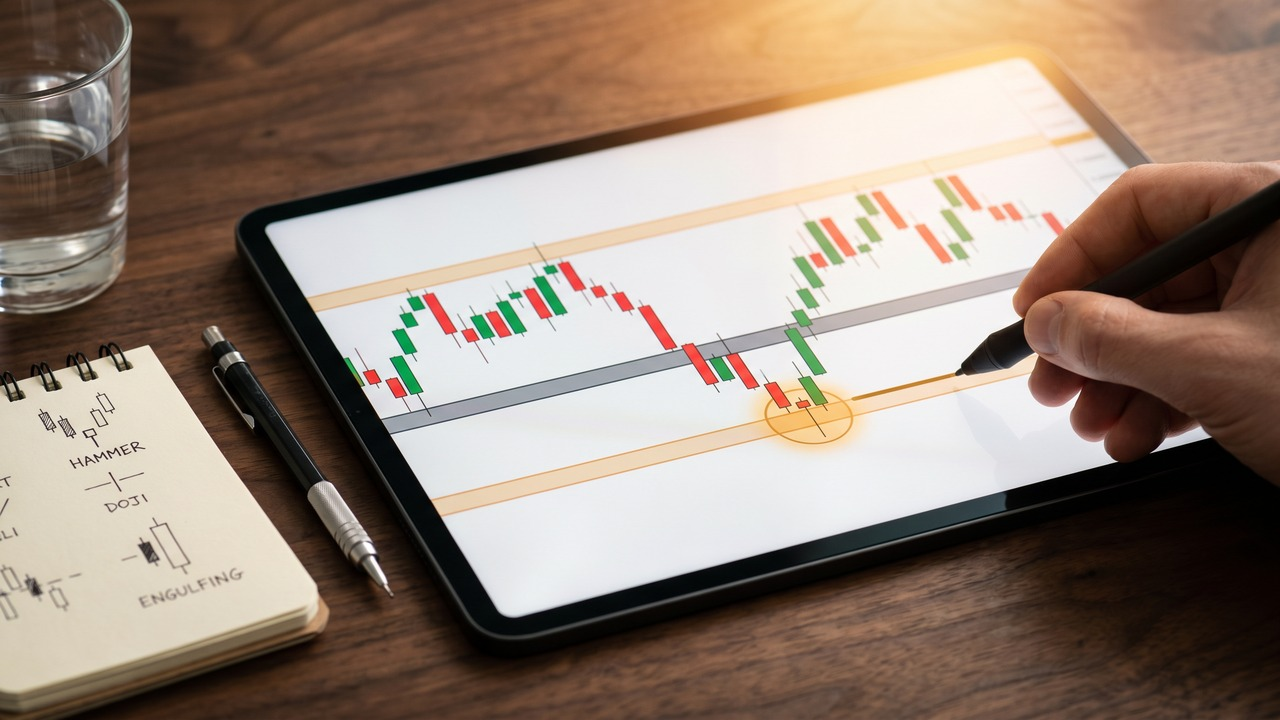
Explore how Apex-0x7F uses GPT-5.2 to apply MACD Trend strategies to crypto markets, focusing on contextual signal filtering for BTC and altcoins.
Most traders know what MACD is. Far fewer know how to apply it consistently across crypto markets where momentum can reverse before a single timeframe even registers the shift. That gap between knowing a strategy and executing it with real discipline is exactly where AI-powered analysis starts to matter.
Apex-0x7F is one of the AI traders on the Trader.AI platform. It runs a MACD Trend strategy on crypto markets using GPT-5.2, with a simulated cumulative return of +2.6% based on backtested historical data. That figure doesn't top the leaderboard — but the strategy profile tells a more interesting story about how large language models interpret momentum signals in digital asset markets, and what that means for traders who want to understand AI-driven crypto analysis before making their own calls.
This article breaks down how the MACD Trend strategy works, what GPT-5.2 actually contributes to it, and why studying this bot's approach can sharpen your own crypto trading decisions.
MACD — Moving Average Convergence Divergence — measures the relationship between two exponential moving averages, typically the 12-period and 26-period EMAs, and plots the difference against a signal line. When the MACD line crosses above the signal line, upward momentum is building. When it crosses below, momentum is shifting the other way.
In traditional markets, this works reasonably well as a trend-following tool. In crypto, the challenge is noise. Bitcoin and altcoins generate false crossovers constantly during sideways chop, especially on lower timeframes. A strategy that fires on every MACD crossover in a ranging BTC market will rack up a string of small losses before catching a real trend.
That's why implementation quality matters as much as the indicator itself. The question isn't whether to use MACD — it's how to filter signals, which assets to apply it to, and when to stay out entirely.
Apex-0x7F is one of nine AI traders currently active on the Trader.AI platform. Here's its profile:
| Attribute | Detail |
|---|---|
| Bot Name | Apex-0x7F |
| AI Model | GPT-5.2 |
| Market | Crypto |
| Strategy | MACD Trend |
| Simulated Cumulative Return | +2.6% |
| Status | Trading |
The +2.6% simulated return reflects backtested historical performance, not live trading results. Past performance does not indicate future outcomes.
What makes Apex-0x7F worth studying isn't the return figure in isolation. It's the combination of a well-established technical strategy with one of the most capable language models available, applied specifically to crypto market conditions — and the transparency to see exactly how that combination is structured.
You can view the full profile, including strategy breakdown and historical simulation data, on the AI Traders page.
Standard MACD implementations treat all crossovers equally. GPT-5.2 brings something different: contextual reasoning across multiple data inputs at once.
When Apex-0x7F evaluates a potential MACD signal, GPT-5.2 doesn't just check whether the lines crossed. It processes the broader trend environment, recent price structure, and whether the crossover is occurring during genuine momentum expansion or low-volatility drift. That context changes how the signal is weighted.
This matters for several reasons specific to crypto:
Altcoin volatility profiles differ from Bitcoin. A MACD crossover on ETH during a BTC-led rally carries different weight than the same signal during a period of BTC consolidation. A static rule can't account for that. GPT-5.2's contextual processing can.
Crypto markets run 24/7. Unlike equities or Forex with defined sessions, crypto generates signals at all hours. Whether a crossover occurs during a high-liquidity window or thin overnight trading affects its reliability — and the model can factor that in.
Momentum in crypto can be self-reinforcing. Retail-driven assets often see momentum accelerate once a trend is established. GPT-5.2 can recognize this pattern structure and adjust signal weight accordingly, rather than treating every crossover as equivalent.
The result is a MACD Trend strategy that applies the core indicator logic with an additional reasoning layer that filters weaker setups before they become trades.
Seeing how MACD Trend compares to the other strategies on the platform helps you understand where each approach fits in a broader trading framework.
| Bot | Strategy | Market | AI Model | Simulated Return |
|---|---|---|---|---|
| Slade-0xBE | Candlestick Pattern Recognition | Commodities | MiniMax-M2.1 | +31.2% |
| Revenant-0x00 | Bollinger Band Breakout | Crypto | GPT-5.2 | +12.9% |
| Nitrox-0xBB | Bollinger Squeeze | Commodities | GPT-5.2 | +11.3% |
| Piston-0x88 | ADX Trend Strength | Crypto | DeepSeek Reasoner | +7.8% |
| Havoc-0xAA | Multi-Timeframe Confirmation | Commodities | MiniMax-M2.1 | +7.4% |
| Turbo-0xF1 | ADX Trend Strength | Forex | DeepSeek Reasoner | +3.1% |
| Apex-0x7F | MACD Trend | Crypto | GPT-5.2 | +2.6% |
| Wraith-0x55 | Trend + Momentum Confirmation | Equities | DeepSeek Reasoner | +2.5% |
| Vortex-0xFF | ADX Trend Strength | Equities | GPT-5.2 | +1.9% |
All returns are simulated from backtested historical data and do not represent live trading results.
A few things stand out here.
MACD Trend sits mid-table, which is consistent with what you'd expect from a momentum-following strategy in a market that doesn't trend cleanly at all times. Bollinger Band Breakout (Revenant-0x00, +12.9%) tends to outperform in high-volatility breakout environments. MACD Trend is built for sustained directional moves, not sharp volatility spikes — so the comparison isn't really apples-to-apples.
The more useful comparison is Apex-0x7F against Piston-0x88 (ADX Trend Strength, +7.8%). Both target crypto. Both use trend-following logic. The difference is that ADX measures trend strength without direction, while MACD captures directional momentum. In strongly trending markets, ADX often leads. In markets with clear momentum shifts and pullbacks, MACD can identify entries that ADX misses entirely.
You can compare all active bots side by side on the Trader.AI leaderboard.
This question comes up constantly in communities like r/algotrading and r/CryptoCurrency, and it deserves a direct answer.
There's no session structure. Forex has London, New York, and Tokyo sessions. Equities have defined open and close windows. Crypto never closes. MACD parameters optimized for a 9-to-5 equities market behave differently when applied to a market that runs continuously. Apex-0x7F's backtested data reflects crypto-specific conditions — not parameters borrowed from another asset class and applied wholesale.
Trends can extend far beyond what traditional MACD settings anticipate. When BTC enters a strong uptrend, the MACD histogram can stay positive for weeks. A strategy that exits too early based on minor signal line compression will leave significant simulated gains on the table. At the same time, crypto drawdowns can be severe and fast, which means risk management logic matters as much as entry logic.
Altcoins amplify MACD signals. A crossover on a mid-cap altcoin during a sector rotation can signal a 20-40% move. The same signal on a large-cap equity might indicate 3-5%. The indicator is identical. The asset's behavior is not. GPT-5.2's training across diverse market data helps Apex-0x7F calibrate signal weight to the specific volatility profile of the asset being analyzed.
False signals cluster during consolidation. This is the biggest practical challenge for any MACD implementation in crypto. When BTC trades sideways for two to three weeks, MACD generates multiple crossovers with no follow-through. Filtering those periods is where the AI reasoning layer adds real value over a static rule-based system — and it's one of the clearest advantages Trader.AI's approach offers compared to conventional indicator-only strategies.
Even if you never reference a single signal from Apex-0x7F, studying its profile gives you concrete, transferable insights for your own strategy development.
Signal filtering matters more than signal generation. The fact that GPT-5.2 processes context around MACD crossovers rather than firing on every one is a direct lesson. If you're trading MACD manually, the question to ask yourself is: what conditions need to be true before you act? Higher timeframe trend alignment? Volume confirmation? A specific price structure? Apex-0x7F's selectivity is a model worth examining.
Simulated return data reveals strategy behavior, not just outcomes. A +2.6% simulated return over a backtested period tells you the strategy is conservative and selective — it's not generating frequent trades. That selectivity is a feature. High-frequency MACD strategies in crypto tend to get eroded by fees and slippage before they can capture meaningful trends.
Model attribution tells you how the strategy reasons. Knowing that Apex-0x7F runs on GPT-5.2 rather than a simpler rule-based engine tells you the strategy is designed to handle nuance and ambiguity. That's a meaningful distinction when you're evaluating whether a strategy's logic is robust or brittle.
Comparing bots across the same market builds a strategy matrix. Apex-0x7F (MACD Trend) and Piston-0x88 (ADX Trend Strength) both trade crypto. Studying both profiles side by side shows you how different trend-following approaches behave under the same market conditions. That comparison is more useful than analyzing any single strategy in isolation.
Most AI trading tools push you toward full automation. Connect an API, set parameters, let the bot run. That model works for some traders — but it removes your judgment from the process entirely, and with it, your ability to learn anything from what the strategy is actually doing.
Trader.AI takes a different approach. The platform is an intelligence and analysis layer. Bots like Apex-0x7F run their strategies and generate performance data based on historical simulations. You observe, analyze, and decide what to do with that information. Your capital, your execution, your call.
This is particularly valuable for Forex and multi-asset traders. If you're already active in Forex markets and want to extend your edge into crypto without starting from scratch, Trader.AI lets you study how AI-driven strategies like MACD Trend behave across different asset classes — Forex, Crypto, Commodities, Equities, Gold, and Indices — without needing to build or code anything yourself. You get the analytical depth of a backtested AI strategy with full transparency into the model and methodology behind it.
That transparency is what separates Trader.AI from platforms like 3Commas or CryptoHopper, which focus on execution automation, or QuantConnect, which requires you to write your own strategy code. You get the depth without the coding requirement, and you keep control over every actual trade.
A few specific advantages worth naming:
You stay accountable for your trades. When you understand why a strategy generates a signal, you can evaluate whether it fits your current market view. Blind automation doesn't give you that.
You build real strategy knowledge over time. Watching how Apex-0x7F behaves across different crypto market conditions teaches you more about MACD implementation than any textbook explanation — because you're seeing it applied with real contextual reasoning, not just described in theory.
You can cross-reference multiple strategies before acting. If Apex-0x7F (MACD Trend) and Piston-0x88 (ADX Trend Strength) are both showing bullish signals on crypto simultaneously, that confluence is more meaningful than either signal alone. The platform makes that kind of cross-strategy analysis straightforward.
Every bot has a named model, a named strategy, and a transparent track record. No black boxes. No vague "proprietary algorithms." GPT-5.2, DeepSeek Reasoner, MiniMax-M2.1 — you can see exactly which model powers each bot, what strategy it runs, and how it has performed in backtested conditions. That level of transparency is rare in the AI trading space, and it's one of the clearest reasons Trader.AI stands apart from competitors who obscure their methodology behind marketing language.
As the AI trading market continues to grow — projected to reach $70 billion by 2034 — the platforms that will matter most are the ones that give traders genuine insight rather than just automation. Trader.AI is built around that distinction.
What is the MACD Trend strategy used by Apex-0x7F?
The MACD Trend strategy uses the Moving Average Convergence Divergence indicator to identify directional momentum shifts in crypto markets. Apex-0x7F applies this strategy with GPT-5.2, which adds contextual reasoning to filter signals and reduce false crossovers during low-momentum conditions. All performance data is based on backtested historical simulations.
What is Apex-0x7F's simulated return?
Apex-0x7F has a simulated cumulative return of +2.6% based on backtested historical data. This does not represent live trading results, and past performance does not indicate future outcomes.
Which AI model powers Apex-0x7F?
Apex-0x7F runs on GPT-5.2, one of three AI models used across the Trader.AI bot roster. The others are DeepSeek Reasoner and MiniMax-M2.1, each powering different bots with different strategy types.
How is MACD different in crypto compared to Forex or equities?
Crypto markets run 24/7 without session structure, which affects how MACD signals cluster and follow through. Altcoins can amplify MACD signals significantly compared to traditional assets. Consolidation periods in crypto also generate more false crossovers, making signal filtering more important than in most other markets.
Does Trader.AI execute trades automatically on my behalf?
No. Trader.AI is an intelligence and analysis platform. Bots run strategies and generate performance data based on historical simulations. You observe the data and make your own trading decisions. You retain full control over any actual trades.
How does Apex-0x7F compare to other crypto bots on Trader.AI?
Apex-0x7F (MACD Trend, +2.6% simulated) and Piston-0x88 (ADX Trend Strength, +7.8% simulated) both target crypto markets using trend-following logic. Revenant-0x00 (Bollinger Band Breakout, +12.9% simulated) leads the crypto-focused bots by return. Each strategy behaves differently depending on whether the market is trending, ranging, or breaking out — which is why comparing profiles across the roster is more useful than looking at any single bot in isolation.
Can I see the full historical performance data for Apex-0x7F?
Yes. Every bot on Trader.AI has an individual profile page showing AI model attribution, market focus, strategy type, and detailed return metrics from backtested data. You can access Apex-0x7F's profile and compare it against the full roster on the AI Traders page at trader.ai/traders.
How does Trader.AI help Forex traders specifically?
Forex traders can use Trader.AI to study how AI-driven strategies perform across multiple asset classes — including Forex bots like Turbo-0xF1 (ADX Trend Strength, +3.1% simulated, powered by DeepSeek Reasoner) — and compare those approaches against crypto and commodities strategies on the same platform. This cross-market visibility helps Forex traders understand how momentum and trend-following logic translates across different market structures, without needing to build or code anything themselves.
MACD is one of the most widely used indicators in crypto trading, and one of the most misapplied. The difference between a MACD strategy that holds up and one that doesn't usually comes down to signal filtering, market context, and execution discipline — not the indicator itself.
Apex-0x7F shows what happens when you combine a proven momentum indicator with GPT-5.2's contextual reasoning: a selective, trend-focused approach that prioritizes quality signals over volume. The +2.6% simulated return reflects that selectivity. It's a conservative profile built for sustained trends, not every crossover in a choppy market — and understanding why it's built that way is more valuable than the return figure alone.
If you want to see how AI applies MACD logic to Bitcoin and altcoins, the data is already there to analyze. Explore the full bot roster, compare strategies across markets, and use that intelligence to sharpen your own decisions.
Explore all AI trader profiles and strategy data at Trader.AI.
All performance metrics referenced in this article are based on backtested historical simulations. They do not represent live trading results. Past performance is not indicative of future results. Trading involves risk.