Silver Price Today: Live XAG/USD Chart & How to Trade Silver CFDs in 2026
Learn how to trade silver CFDs in 2026, understand XAG/USD price drivers like industrial demand, and explore real-time silver market trends.

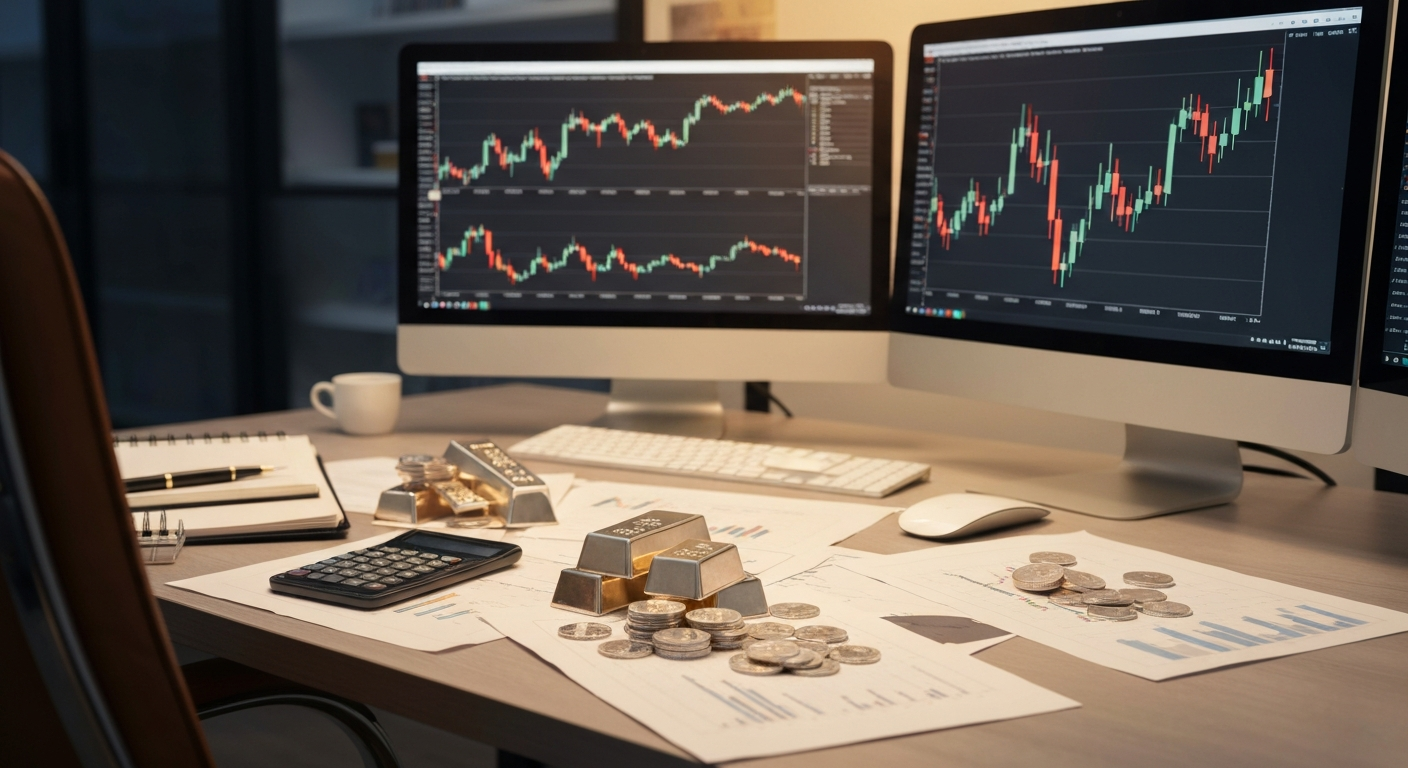
Learn how to trade silver CFDs in 2026, understand XAG/USD price drivers like industrial demand, and explore real-time silver market trends.
Silver trades around the clock, so the XAG/USD price you see at any given moment reflects live supply and demand flowing through New York, London, and Asian sessions simultaneously. In 2026, silver has been one of the most closely watched metals markets — pulled in multiple directions by industrial growth, macro uncertainty, and a steady stream of active traders looking for volatility with real fundamentals behind it.
For the live XAG/USD price, open a real-time chart on MT5 or head to specmarkets.com and launch a free demo account to see live pricing immediately.
Silver is quoted in US dollars per troy ounce. When you hear "silver is at $30," that means one troy ounce costs $30 USD. XAG/USD is the standard forex-style notation used across CFD brokers and trading platforms.
Silver is not a one-dimensional market. It behaves like a metal, a currency hedge, and an industrial commodity — sometimes all at once. That complexity creates real opportunity, but it also means you need to understand what actually moves the price before you put on a trade.
Silver has more industrial applications than gold. It is a core input in solar panels, electric vehicles, semiconductors, and medical equipment. In 2026, the ongoing build-out of solar infrastructure across Asia and Europe remains one of the strongest structural demand drivers for the metal. When manufacturing activity picks up, silver demand tends to follow.
That dynamic means silver can rally even when gold is flat — and it can sell off sharply when global growth expectations turn.
Like most commodities, silver is priced in US dollars. A weaker dollar makes silver cheaper for buyers holding other currencies, which tends to lift demand and push prices higher. A stronger dollar works in reverse.
Federal Reserve decisions carry weight here too. Higher interest rates raise the opportunity cost of holding a non-yielding asset like silver, which can pressure prices. Rate cut expectations, on the other hand, tend to support metals broadly.
The gold-silver ratio tells you how many ounces of silver it takes to buy one ounce of gold. Historically, that figure has averaged somewhere between 60 and 80. When it climbs well above that range, some traders read it as silver being undervalued relative to gold and position accordingly.
Tracking this ratio alongside the XAG/USD price adds a useful layer of context when you are trying to assess silver's direction.
Most silver is mined as a byproduct of copper, zinc, and lead production — which means supply does not respond quickly to price signals the way a primary metal might. Mine disruptions, geopolitical events in key producing countries, and declining ore grades can all tighten supply faster than the market anticipates.
If you are newer to silver charts, here is what to focus on:
On MetaTrader 5, you can pull up XAG/USD directly, apply your preferred indicators, and set price alerts. Spec Markets' MT5 environment supports full EA and algo trading, so if you want to automate your silver strategy, the infrastructure is already there.
Trading silver as a CFD means speculating on XAG/USD price movement without owning physical silver. You go long if you expect the price to rise, short if you expect it to fall. Leverage amplifies both potential gains and potential losses.
CFD trading involves significant risk. Leverage can work against you as well as for you, and you can lose more than your initial deposit without proper risk management. Trade only with capital you can afford to lose.
Spec Markets offers two accounts, both starting at $50 with leverage up to 1000:1:
| Account | Spreads | Commission | Best For |
|---|---|---|---|
| Raw Zero | From 0.0 pips | $3.50 per lot per side | Scalpers, day traders |
| Pure Spread | From 1.0 pips | None | Swing traders, longer holds |
For traders opening and closing multiple silver positions per session, Raw Zero typically produces lower total costs. If you hold positions for hours or days and trade less frequently, Pure Spread keeps things clean with no per-trade commission.
Full pricing details at specmarkets.com/en-us/trading/spreads/.
Scalping silver: You are targeting small moves — often 10 to 30 cents per ounce — multiple times per session. That demands tight spreads and fast fills. At Spec Markets, average execution speed is 0.028 seconds with 99.9% platform uptime. When you are trading silver through a volatile session, those numbers matter.
Day trading silver: Positions open and close within the same day, keeping you clear of overnight swap exposure. You focus on intraday setups around key levels and scheduled news events.
Swing trading silver: You hold for one to several days, targeting larger moves driven by macro themes or technical breakouts. Pure Spread suits this style — no per-lot commission eating into wider-target trades.
Position sizing and stop placement are not optional. A few practical rules:
Before entering any silver trade, use the trading calculator at specmarkets.com to model your position size, margin requirement, and potential outcome.
Comparing brokers for silver CFD trading in 2026? Here is what actually sets Spec Markets apart:
Open a live account or try a free demo at specmarkets.com.
What is the silver price right now in 2026?
XAG/USD changes every second during market hours. Open a free demo account on MetaTrader 5 through Spec Markets, or check any real-time metals chart for the current price. It reflects global spot trading across New York, London, and Asian sessions.
What is XAG/USD?
XAG/USD is the trading symbol for silver priced in US dollars per troy ounce. XAG is the ISO code for silver; USD is the US dollar. It is the standard notation used by CFD brokers and forex platforms worldwide.
Can I trade silver CFDs with a small account?
Yes. The minimum deposit at Spec Markets is $50 for both Raw Zero and Pure Spread. You can trade silver CFDs from 0.01 lots, which keeps position size and margin requirements manageable. Always size according to your actual risk tolerance.
What is the best time to trade silver?
Silver is most liquid and volatile during the overlap between the New York and London sessions — roughly 13:00 to 17:00 UTC. US economic data releases, FOMC announcements, and major geopolitical events can also produce sharp silver moves regardless of session time.
What is the gold-silver ratio and why does it matter?
The ratio shows how many ounces of silver equal one ounce of gold. A high reading — above 80 historically — has often suggested silver is undervalued relative to gold. Traders use it as one signal among several when deciding whether silver is likely to outperform or lag.
What is the difference between trading silver CFDs and buying physical silver?
With a CFD, you speculate on price movement without owning the metal. You can go long or short, apply leverage, and exit quickly. Physical silver requires storage and cannot be shorted easily. CFDs suit active trading; physical silver suits long-term holders who want direct ownership.
Does Spec Markets offer negative balance protection on silver trades?
Yes. The zero cut system provides negative balance protection across all instruments, including silver CFDs — your account balance cannot go below zero from market moves. That does not eliminate trading risk, and losses can still reach your full deposited amount.
Silver is one of the most dynamic markets available to CFD traders in 2026. Industrial demand, dollar movements, rate expectations, and the gold-silver ratio all feed into the price — creating consistent opportunities for scalpers, day traders, and swing traders.
Trading it well comes down to tight spreads, fast execution, and a clear risk framework. Start with a free demo, pick the account type that fits your approach, and use the tools available to you.
Open a live account or try a demo today at specmarkets.com.
Trading CFDs involves significant risk of loss. Leverage can amplify both gains and losses. You may lose more than your initial deposit. Ensure you understand the risks involved and trade responsibly. Past performance is not indicative of future results.