Spec Markets vs Pepperstone: Spreads, Leverage, and Platform Compared
Compare Spec Markets and Pepperstone on spreads, leverage, and platforms to find the best broker for your specific trading style and capital needs.

Compare Spec Markets and Pepperstone on spreads, leverage, and platforms to find the best broker for your specific trading style and capital needs.
#spec-markets-vs-pepperstone-spreads-leverage-platform-compared
Both Spec Markets and Pepperstone target active traders with competitive pricing and MT5 access. But beneath the surface, these brokers serve different trader profiles and priorities.
Pepperstone built its reputation on razor-thin spreads and institutional-grade execution. Spec Markets combines competitive pricing with higher leverage caps and community-driven features that Pepperstone doesn't offer. If you're comparing these two, you're likely focused on cost efficiency and execution quality—but the right choice depends on your specific trading style and capital requirements.
Here's how they actually stack up across the metrics that impact your bottom line.
Spec Markets keeps it simple with two account types:
Raw Zero Account:
Pure Spread Account:
Pepperstone offers multiple account tiers:
Razor Account:
Standard Account:
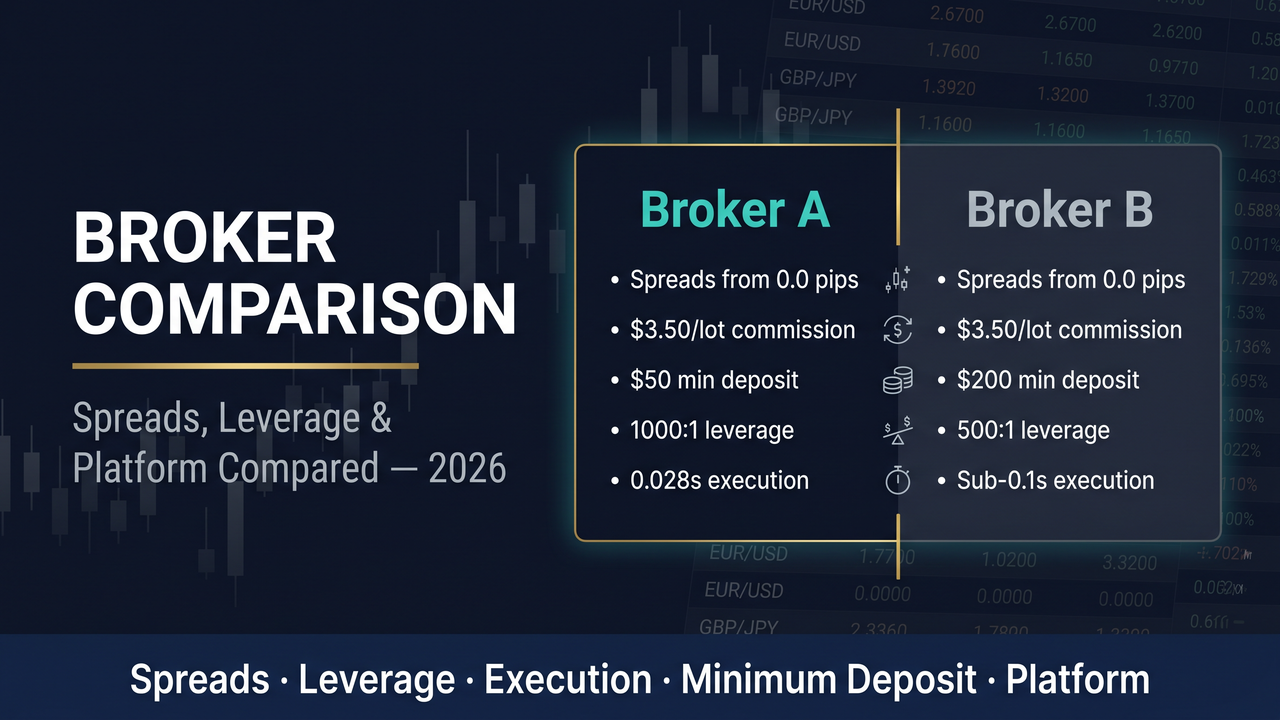
On paper, the commission structures look identical. Both charge $3.50 per lot per side on their raw spread accounts. The real differences emerge in three areas:
Minimum Deposit: Spec Markets requires only $50 versus Pepperstone's $200. For newer traders or those testing strategies with smaller capital, this 75% lower barrier matters.
Spread Consistency: Both advertise spreads "from 0.0 pips," but consistency during high-impact news and market opens varies. Spec Markets' access to 15+ liquidity providers helps maintain tighter spreads during volatile periods.
Hidden Costs: Pepperstone's overnight financing rates tend to run higher on major pairs, particularly for carry trades. This impacts swing traders more than scalpers.
This is where the brokers diverge significantly.
The 1000:1 versus 500:1 difference isn't just about position sizing. Higher leverage means:
Lower Margin Requirements: You can maintain the same position sizes with less capital tied up, freeing funds for other opportunities.
Scalping Efficiency: Day traders and scalpers benefit from the capital efficiency, especially when running multiple positions across different pairs.
Risk Management Flexibility: Contrary to popular belief, higher available leverage can improve risk management by allowing smaller position sizes relative to account balance while maintaining meaningful profit potential.
Pepperstone's 500:1 cap reflects their focus on more conservative European regulatory standards, while Spec Markets' 1000:1 availability caters to active traders in APAC markets where higher leverage is standard.
Both brokers offer MetaTrader 5 with full EA support, but the execution differs:
Spec Markets MT5:
Pepperstone MT5:
Spec Markets emphasizes speed with their sub-0.03 second execution messaging. Pepperstone focuses more on fill quality and slippage minimization through their Equinix infrastructure.
For scalpers and high-frequency traders, Spec Markets' execution speed advantage becomes meaningful. For swing traders and position traders, Pepperstone's infrastructure stability might matter more.
Spec Markets: Integrates social trading features and weekly Trading Sprint Challenges directly into the platform experience.
Pepperstone: Offers cTrader as an alternative to MT5, plus more advanced charting tools and market analysis features.
Two clean account options eliminate decision paralysis:
Multiple account tiers create more choice but also complexity:
Spec Markets' $50 minimum versus Pepperstone's $200 isn't just about affordability—it's about testing and strategy development. Many traders prefer to test a new broker with smaller capital before committing larger amounts.
The simplified two-account structure also reduces confusion for traders switching from other brokers who are tired of navigating complex account menus.
Pepperstone has the longer operational history and broader regulatory coverage. Spec Markets offers equivalent safety features but with less market tenure.
For traders prioritizing regulatory coverage, Pepperstone's multiple licenses provide more jurisdictional options. For traders focused on trading conditions over regulatory breadth, both meet essential safety requirements.
Trading Sprint Challenge: Weekly competitions with $1,100 prize pools over 10 weeks, combining skill development with cash rewards.
Social Trading Integration: Community features built into the trading experience rather than offered as separate tools.
Gamified Retention: Rewards program that recognizes trading activity and community participation.
Educational Resources: Comprehensive trading education and market analysis.
Research Tools: Advanced charting and fundamental analysis features.
Institutional Services: Dedicated support for high-volume traders and money managers.
Spec Markets builds community engagement into the trading experience. Pepperstone focuses on providing institutional-grade infrastructure and educational resources.
Active traders who value peer interaction and competitive elements may prefer Spec Markets' approach. Traders who prioritize research tools and educational content might lean toward Pepperstone.
Pepperstone offers wider instrument variety, including individual stock CFDs that Spec Markets doesn't provide. For traders focused on forex, indices, and commodities, both brokers cover the essential markets.
Spec Markets' more focused instrument list reflects their targeting of active forex and index traders rather than stock pickers.
Spec Markets treats support as part of the trading community experience. Pepperstone provides more traditional institutional-style customer service with broader language support and dedicated relationship management.
Spec Markets Advantages:
Pepperstone Advantages:
Winner: Spec Markets edges ahead on execution speed and leverage.
Spec Markets Advantages:
Pepperstone Advantages:
Winner: Pepperstone's research tools and instrument variety provide more value.
Spec Markets Advantages:
Pepperstone Advantages:
Winner: Depends on strategy—speed-focused algos favor Spec Markets, stability-focused prefer Pepperstone.
Spec Markets and Pepperstone both deliver competitive trading conditions, but they serve different priorities:
Choose Spec Markets if you:
Choose Pepperstone if you:
Both brokers offer legitimate institutional-grade pricing with spreads from 0.0 pips and identical commission structures. Your choice should align with your trading style, capital requirements, and feature preferences rather than cost alone.
For active traders in APAC markets seeking maximum leverage and execution speed, Spec Markets delivers competitive advantages that matter. For traders wanting comprehensive broker services with proven stability, Pepperstone remains a solid choice.
The real question isn't which broker is "better"—it's which one fits your specific trading approach and growth plans.
Ready to experience institutional-grade conditions with community-driven features? Learn more at specmarkets.com.
Risk Warning: CFD trading involves significant risk of loss. Leverage can amplify both profits and losses. Past performance does not guarantee future results. Only trade with capital you can afford to lose.