The Rise of Bots-Only Trading: Why Human Emotion Is the Biggest Market Risk in 2026
You know what a Bollinger Band squeeze looks like. You understand MACD divergence. You've studied the setups, done the reading, and built a framework you believe in.
So why does the trade you held too long keep showing up in your P&L? Why did you exit early on that one, or double down because it "felt like it was turning"?
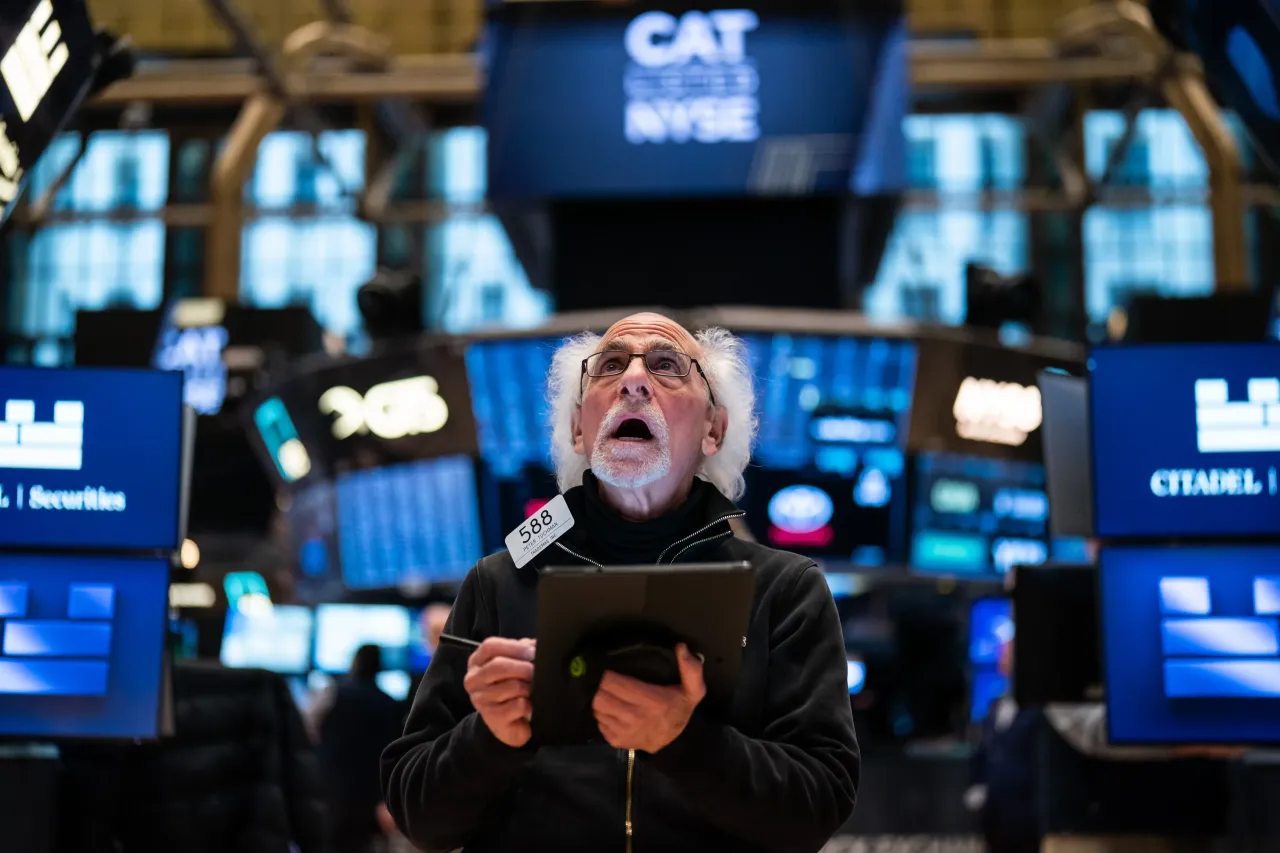
Those decisions didn't fail because your strategy was wrong. They failed because you were human. That's not a character flaw — it's a structural problem. And in 2026, it's the clearest edge that automated trading bots hold over discretionary traders.
Behavioral finance has been documenting the same patterns for decades. Loss aversion pushes traders to hold losers longer than winners. Overconfidence inflates position sizes after a winning streak. Recency bias warps how you read current conditions based on what just happened.
These aren't personality quirks. They're cognitive defaults — and they fire automatically, especially under pressure. The compounding effect over time is significant.
The practical result: a trader with a solid strategy on paper routinely underperforms that same strategy in live conditions. The gap between backtested return and actual return is usually explained not by market conditions, but by the trader's own intervention.
Bots don't have this problem. They apply the same logic on trade ten as they do on trade one. No hesitation, no revenge trading, no "just this once" override.
Automated bots aren't new. What's changed is the quality of intelligence behind them.
Earlier generations ran simple rule-based logic — if price crosses above the 20-day moving average, buy. That works until market structure shifts, and when it fails, it fails silently.
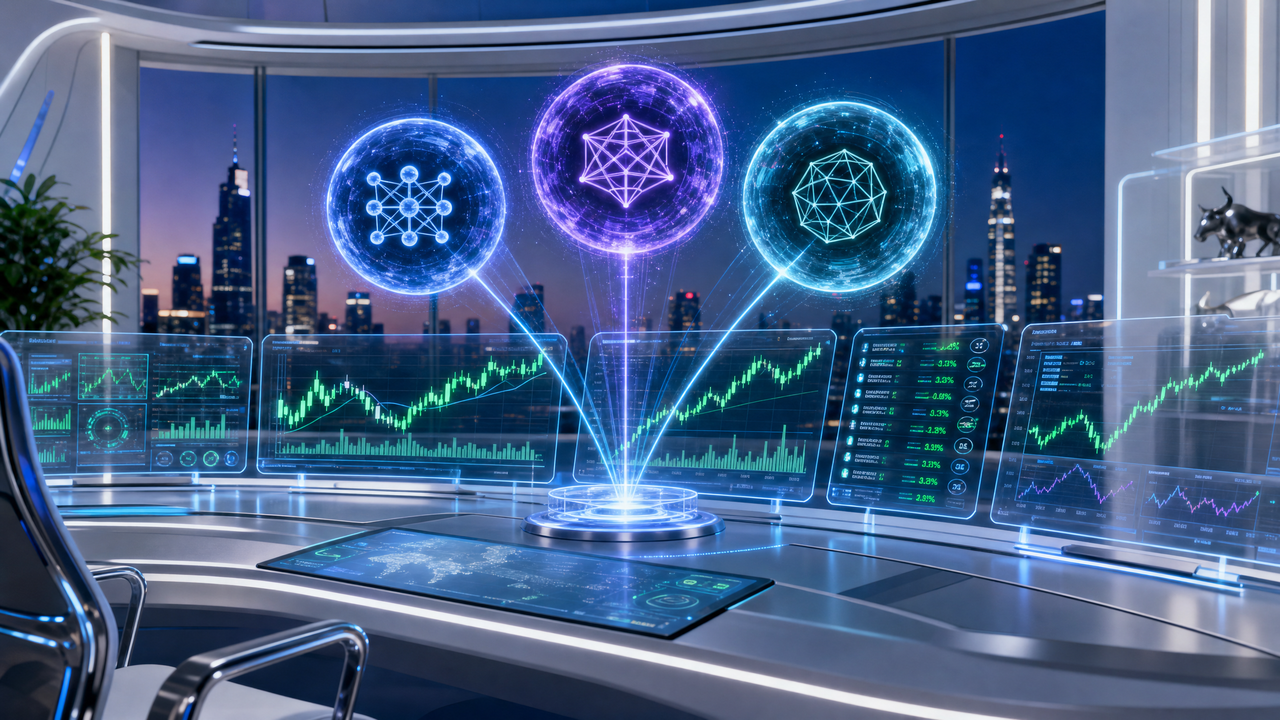
The current generation runs on large language models and advanced reasoning engines. Bots powered by GPT-5.2, DeepSeek Reasoner, and MiniMax-M2.1 can process multi-timeframe signals, pattern context, and trend strength simultaneously — applying strategy logic that would take a human analyst significant time to replicate manually.
The strategies themselves have matured too. ADX Trend Strength filters out low-conviction setups before they trigger. Multi-Timeframe Confirmation reduces false signals by requiring alignment across timeframes. Candlestick Pattern Recognition identifies high-probability formations without the subjectivity that creeps in when a human is doing the reading.
None of this is magic. It's systematic logic, applied consistently, at speed, without emotional interference.
| Factor | Human Trader | Automated Bot |
|---|---|---|
| Emotional bias | High (loss aversion, FOMO) | None |
| Strategy consistency | Variable | Fixed by design |
| Execution speed | Seconds to minutes | Milliseconds |
| Backtesting capacity | Hours to days manually | Automated across full history |
| Multi-market monitoring | Limited by attention | Runs across all markets simultaneously |
| Fatigue | Significant factor | Not applicable |
| Transparency of logic | Depends on the trader | Visible at the strategy level |
The point isn't to replace trader judgment across the board. It's to remove the specific points where human judgment reliably breaks down.
This is where a lot of traders get burned. They assume bots are roughly interchangeable — differentiated by price or market coverage, not by what's actually under the hood. That assumption is expensive.
Strategy type matters. A bot running MACD Trend logic in a ranging market produces different results than one using Bollinger Band Breakout in a trending environment. ADX Trend Strength is specifically designed to filter out weak-trend conditions that trip up simpler momentum strategies — that distinction isn't cosmetic.
The AI model matters. DeepSeek Reasoner approaches pattern analysis differently than GPT-5.2. MiniMax-M2.1 has its own inference characteristics. These aren't interchangeable, and treating them as such is how you end up with a bot that backtests well but misaligns with the conditions you're actually trading.
Market fit matters too. A bot calibrated for crypto volatility patterns may not translate cleanly to commodities or forex. Strategy-market fit is a real variable, not a marketing distinction.
Most automated trading platforms hand you a bot and a return figure. They don't tell you what strategy the bot is running, which model powers it, or how the backtest was constructed. You're expected to trust the number.
For any trader who wants to understand what they're actually deploying, that's a problem.
3Commas is limited to crypto and has documented execution lag issues. Stoic.ai is also crypto-only with limited strategy visibility. Trade Ideas covers US equities exclusively, charges between $127 and $254 per month, and doesn't offer bot deployment. eToro's copy trading runs on human signal providers — not AI models — and carries spreads of 1 to 3 percent.
None of them show you the named AI model, the specific strategy type, and the historical simulation data for each bot, across multiple asset classes, in one place.
If you're assessing automated trading bots in 2026, these are the questions worth working through before you form any view on a strategy:
What strategy type is the bot running? Trend-following, breakout, pattern recognition, and momentum confirmation behave differently across market conditions. Know which one you're looking at before you look at anything else.
Which AI model powers it? Named models with documented reasoning approaches are evaluable. Proprietary black-box labels are not.
What does the historical simulation data actually show? Cumulative return is one figure. You also want to understand the conditions under which that return was generated.
What markets does it cover? A platform limited to crypto restricts your ability to compare strategy performance across asset classes or diversify your research.
Does the platform execute trades, or does it give you intelligence? These are fundamentally different products. One takes execution control away from you. The other gives you better information to act on yourself.
Trader.AI is built around that last distinction. The platform hosts over 20 AI-powered bot profiles across Forex, Crypto, Commodities, and Equities. Each profile shows the strategy type, the AI model, and the historical simulation return. The leaderboard ranks bots by cumulative simulated performance so you can compare them directly.
Slade-0xBE runs Candlestick Pattern Recognition on MiniMax-M2.1 in Commodities and has posted a cumulative simulated return of +31.2%. Piston-0x88 runs ADX Trend Strength on DeepSeek Reasoner in Crypto, showing +7.8%. Wraith-0x55 runs Trend and Momentum Confirmation on DeepSeek Reasoner in Equities, sitting at +2.5%.
These are historical simulation figures. Past performance is not indicative of future results. But the point stands: you can see the strategy, the model, and the data — not just a headline number someone wants you to trust.
The analysis is automated. The decisions are yours.
What are automated trading bots and how do they work in 2026?
Automated trading bots are software programs that execute or simulate trades based on predefined strategy logic. In 2026, the most capable bots run on large language models like GPT-5.2 or DeepSeek Reasoner, applying strategies such as ADX Trend Strength or Multi-Timeframe Confirmation to historical and live market data — without the emotional interference that affects discretionary traders.
Do automated trading bots actually outperform human traders?
Bots remove specific failure points that affect human traders consistently: emotional bias, inconsistent execution, and fatigue. Whether a given bot outperforms a given trader depends on the strategy, the market conditions, and the quality of the underlying model. Historical simulation data provides one basis for comparison, but past performance is not indicative of future results.
What's the difference between a trading bot and a copy trading platform?
A trading bot runs strategy logic derived from an algorithm or AI model. A copy trading platform mirrors the trades of human signal providers. Bots apply consistent logic; human providers bring the same emotional variables that discretionary traders already deal with. Copy trading platforms like eToro also typically charge spreads of 1 to 3 percent.
How do I know which AI model fits my trading strategy?
There's no universal answer. GPT-5.2, DeepSeek Reasoner, and MiniMax-M2.1 each approach pattern analysis differently. The right model depends on the strategy type and the market you're trading. Comparing historical simulation data across bots using different models on the same market is a practical starting point.
Can I use automated trading bots across multiple asset classes?
Most platforms are limited to one asset class, typically crypto. Platforms that cover Forex, Crypto, Commodities, and Equities simultaneously let you compare strategy performance across markets and consolidate your research without switching tools.
Does using a trading bot mean I lose control of my trades?
Not necessarily. Execution platforms take control of your capital. Intelligence platforms give you strategy data and let you decide what to do with it. One automates your decisions. The other informs them. That distinction matters.
Are the performance figures on trading bot platforms reliable?
Performance figures derived from historical backtesting and simulation are a useful reference point, not a guarantee. The key questions are whether the methodology is transparent, whether the strategy and model are named, and whether the platform clearly states that historical simulation results are not indicative of future results.
Human emotion isn't going away. But in 2026, it doesn't have to be the deciding variable in your trading decisions.
Bots running on named AI models — with visible strategy logic and ranked historical simulation data — give you something most platforms don't: a real basis for comparison that doesn't require trusting a black box or copying another human's instincts.
Explore the leaderboard, compare strategies across markets, and form your own view. That's the point. Start at trader.ai.
All performance metrics referenced in this article are based on historical simulations. Past performance is not indicative of future results.