Top 10 Forex Trading Mistakes Beginners Make (And How to Avoid Them)
Learn the 10 most common forex trading mistakes beginners make and how to avoid them to protect your capital.

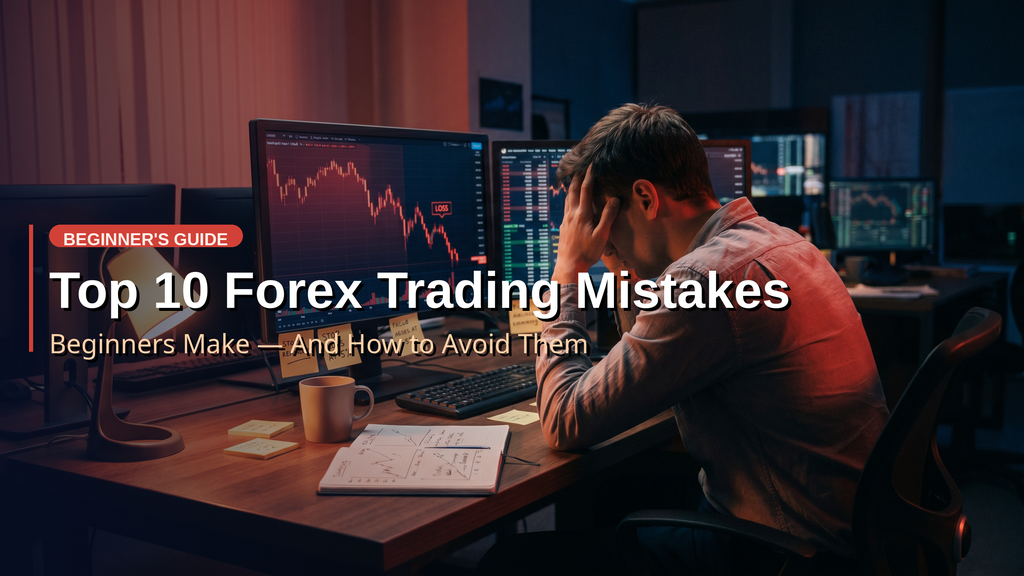
Learn the 10 most common forex trading mistakes beginners make and how to avoid them to protect your capital.
The forex market trades over $7.5 trillion daily, yet studies show that 80% of new forex traders lose money within their first year. This isn't because forex is impossible to trade profitably. It's because beginners repeatedly make the same preventable mistakes.
Every successful trader has lost money learning these lessons. The difference is they learned from their mistakes instead of repeating them. This guide covers the 10 most common forex trading mistakes beginners make and gives you actionable steps to avoid each one.
The Mistake: Jumping into trades based on gut feelings, tips from social media, or random market movements without a clear strategy.
Why It's Costly: Trading without a plan is like driving blindfolded. You have no criteria for entering trades, no exit strategy, and no way to measure what works. This leads to inconsistent results and emotional decision-making.
How to Fix It:
A solid trading plan answers these questions: What currency pairs will you trade? What timeframes will you use? How much risk will you take per trade? When will you trade, and when will you stay out?
The Mistake: Using maximum leverage (like 1000:1) on every trade because "bigger leverage means bigger profits."
Why It's Costly: High leverage amplifies both gains and losses. A 1% move against you with 100:1 leverage wipes out your entire position. New traders often blow their accounts in days using excessive leverage.
How to Fix It:
Think of leverage like a sports car. Just because it can go 200 mph doesn't mean you should drive that fast on your first day.
The Mistake: Focusing only on potential profits while ignoring how much you could lose.
Why It's Costly: Poor risk management turns small losses into account killers. One bad trade without proper risk controls can erase weeks of profits.
How to Fix It:
Risk management isn't about avoiding losses. It's about controlling them so you can stay in the game long enough to be profitable.
The Mistake: Taking too many trades because you think more trades equal more profits.
Why It's Costly: Overtrading leads to poor trade selection, higher transaction costs, and emotional exhaustion. Quality beats quantity in forex trading.
How to Fix It:
The best traders often make fewer trades but with higher conviction and better risk-reward ratios.
The Mistake: Immediately entering new trades to "win back" money after a loss, often with larger position sizes.
Why It's Costly: Chasing losses leads to revenge trading, where emotions override strategy. This typically results in even bigger losses and damaged confidence.
How to Fix It:
Professional traders know that some days are for making money, and some days are for preserving capital.
The Mistake: Making trading decisions based on fear, greed, excitement, or frustration instead of your trading plan.
Why It's Costly: Emotional trading leads to impulsive decisions, poor timing, and inconsistent results. Fear makes you exit winning trades too early, while greed keeps you in losing trades too long.
How to Fix It:
The market doesn't care about your emotions. Successful trading requires discipline and objectivity.
The Mistake: Entering trades without stop losses, hoping losing positions will "come back."
Why It's Costly: Without stop losses, small losses can become account-destroying disasters. The forex market can move against you for days or weeks.
How to Fix It:
A stop loss is your insurance policy. You wouldn't drive without car insurance, so don't trade without stop losses.
The Mistake: Selecting brokers based only on bonuses, high leverage, or flashy marketing without checking their regulatory status.
Why It's Costly: Unregulated brokers may manipulate prices, refuse withdrawals, or disappear with your money. There's no protection if something goes wrong.
How to Fix It:
When choosing a broker, prioritize safety and reliability over bonuses and promotions. Your capital's security matters more than a deposit bonus.
The Mistake: Jumping straight to live trading without practicing on a demo account first.
Why It's Costly: Demo trading lets you test strategies and learn platform features without risking real money. Skipping this step often leads to costly mistakes that could have been avoided.
How to Fix It:
Demo trading isn't just for complete beginners. Even experienced traders use demo accounts to test new strategies before risking real capital.
The Mistake: Expecting to double your account monthly or quit your job after a few profitable trades.
Why It's Costly: Unrealistic expectations lead to excessive risk-taking and disappointment. When reality doesn't match expectations, many traders give up or make increasingly desperate trades.
How to Fix It:
Professional traders often aim for 10-20% annual returns. If hedge funds with billions in capital and teams of experts target these returns, your expectations should be similarly realistic.
Avoiding these mistakes requires building disciplined trading habits:
Start Small: Begin with a $50 minimum deposit and small position sizes. Focus on learning, not earning.
Practice Consistently: Spend time on demo accounts before risking real money. Treat demo trading seriously.
Keep Records: Document every trade with entry/exit points, reasons, and outcomes. Review weekly to identify patterns.
Stay Educated: Markets evolve constantly. Read trading books, follow market analysis, and learn from experienced traders.
Choose the Right Tools: Use a regulated broker with tight spreads, fast execution, and reliable platforms. Your trading infrastructure matters.
Spec Markets offers both demo and live accounts with spreads from 0.0 pips and execution speeds of 0.028 seconds. Whether you choose the Raw Zero account with commission or the Pure Spread account without commission, you get access to MetaTrader 5, social trading features, and negative balance protection. Learn more at specmarkets.com.
How much money do I need to start forex trading?
You can start forex trading with as little as $50. However, having more capital gives you better risk management options and reduces the pressure to make quick profits.
What's the best currency pair for beginners?
Major pairs like EUR/USD, GBP/USD, and USD/JPY are best for beginners due to tight spreads, high liquidity, and predictable price movements.
How long does it take to become profitable in forex?
Most traders need 6-12 months of consistent practice and education before achieving regular profitability. Some take longer, depending on their dedication and learning approach.
Should I use trading robots or copy other traders?
Automated trading and copy trading can be useful tools, but you should understand the strategies being used. Don't rely on them without learning fundamental trading skills yourself.
What's the difference between demo and live trading?
Demo trading uses virtual money, so there's no emotional pressure. Live trading involves real money and real emotions, which can significantly impact decision-making.
How do I know if my broker is regulated?
Check your broker's website for regulatory licenses and verify them with the regulatory body. Regulated brokers display their license numbers prominently and submit to regular audits.
What's the most important skill for forex trading?
Risk management is the most important skill. You can have a 40% win rate and still be profitable with proper risk management, but poor risk control will destroy even high win rates.
Forex trading offers significant opportunities, but success requires avoiding common beginner mistakes. Focus on education, practice with demo accounts, manage your risk carefully, and choose regulated brokers with transparent pricing.
Remember: every professional trader was once a beginner who made mistakes. The key is learning from them quickly and building disciplined trading habits that support long-term success.
Ready to start your forex trading journey? Learn more at specmarkets.com and discover how institutional-grade execution and community features can support your trading goals.
Risk Warning: Trading forex and CFDs involves significant risk and may not be suitable for all investors. You could lose more than your initial deposit. Ensure you understand the risks before trading.