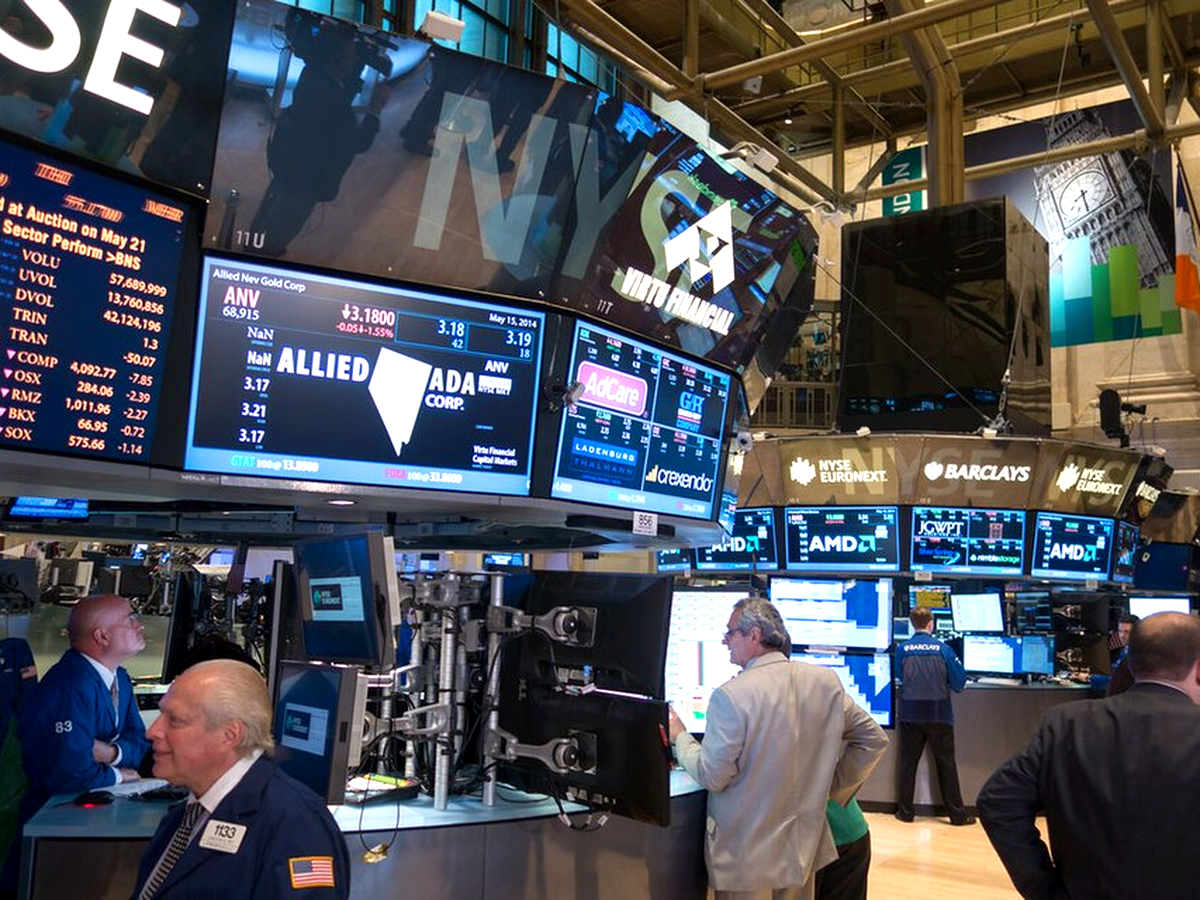
What Is a Raw Spread Account? How Zero-Pip Spreads Work for Forex Traders
Learn how raw spread accounts work, why zero-pip spreads occur, and how they can significantly reduce trading costs for active forex traders.


Learn how raw spread accounts work, why zero-pip spreads occur, and how they can significantly reduce trading costs for active forex traders.
Most retail forex brokers make money by marking up the spread between the bid and ask price. When you see EUR/USD quoted at 1.2 pips, that figure already includes the broker's margin on top of the actual interbank spread.
This model works fine for casual traders. But for anyone executing a high volume of trades, those marked-up spreads add up fast.
Raw spread accounts cut out the markup. Instead of inflating spreads, brokers pass through the actual interbank rates they receive from their liquidity providers — which can be as tight as 0.0 pips during peak market hours.
To compensate for that reduced spread revenue, brokers charge a flat commission per trade — usually between $3 and $7 per standard lot per side. It's a cleaner arrangement: you know exactly what each trade costs before placing it.
Zero-pip spreads occur when bid and ask prices from liquidity providers align perfectly — creating no gap between buying and selling at that exact moment. This happens during high-liquidity windows when multiple banks and institutions actively quote the same pair.
Major pairs like EUR/USD, GBP/USD, and USD/JPY hit zero-pip spreads most often during the London-New York session overlap, when trading volume peaks. Exotic pairs are a different story — thinner liquidity and fewer market makers mean tight spreads like these are rarely on the table.
Several market conditions push spreads toward zero:
High Trading Volume: More participants during peak hours means more competition among liquidity providers — and that competition compresses spreads.
Pre-News Positioning: Ahead of major economic releases, spreads often tighten as traders jockey for position. Once the data actually drops, they tend to widen sharply.
Algorithmic Trading: High-frequency algorithms are constantly arbitraging small price differences, which helps keep spreads tight when conditions are normal.
Multiple Liquidity Sources: Brokers connected to several tier-1 banks and ECNs can aggregate quotes and offer better pricing as a result.
Scalpers targeting 2–5 pip moves feel the difference most. Paying 1.5 pips in spread markup versus 0.2 pips plus a commission is a meaningful gap when you're trading at volume.
A scalper running 100 EUR/USD trades per month could save $400–600 by moving from a 1.2 pip standard account to a 0.1 pip raw spread account with $3.50 commission per side.
Day traders executing 10–20 trades daily also benefit from the cost reduction. More importantly, the fixed commission structure makes it easier to calculate exact costs per trade and build those into risk management decisions.
Raw spread accounts are especially useful for day traders who:
Swing traders holding positions for days or weeks see less of an edge. When you're targeting 50–100 pip moves, the difference between 1.2 pips in spread and 0.3 pips plus commission becomes relatively minor.
That said, swing traders who trade frequently or use larger position sizes can still benefit — both from the cost savings and the cleaner pricing transparency.
Raw spread account commissions typically run $2.50 to $7.00 per standard lot per side. Opening and closing a 1-lot EUR/USD position at $3.50 per side means $7.00 in total commission for that round trip.
Some brokers offer tiered pricing for high-volume traders, and others run rebate or loyalty programs that effectively lower costs for active clients.
To see whether a raw spread account actually saves you money, compare total costs across both account types:
Standard Account Cost = Spread markup × Position size × Number of trades
Raw Spread Account Cost = (Raw spread + Commission) × Position size × Number of trades
For 1 standard lot on EUR/USD:
That's $3 saved per trade. Execute 100 trades and you've preserved an extra $300 in your account.
Some brokers promote low commissions but make up the difference through other channels:
Look at your complete trading costs, not just the commission rate in the marketing materials.
Most raw spread accounts run on platforms like MetaTrader 5, which gives you Level II pricing, one-click execution, advanced charting, and full support for algorithmic trading through Expert Advisors. It's a solid environment for taking advantage of tight spreads with professional-grade tools.
Because raw spread accounts connect directly to liquidity providers rather than routing through a dealing desk, execution tends to be faster and slippage lower. Reputable brokers publish their average execution speeds — anything under 30 milliseconds works well — and provide transparent fill statistics rather than burying them in small print.
Spread Transparency: Advertised spreads should reflect actual trading conditions, not just the narrow quotes you see during quiet market hours or in promotional content.
Commission Competitiveness: Look at total trading costs across brokers — factor in any volume discounts or rebate programs that could reduce your effective rate.
Liquidity Provider Network: Brokers with connections to tier-1 banks and multiple ECNs generally provide better pricing and more reliable execution than those working with fewer provider relationships.
Regulatory Compliance: Confirm proper regulation, with client funds held in segregated accounts and appropriate investor protections in place.
Technology Infrastructure: Platform reliability and execution speed have more impact than most traders expect — particularly for high-frequency strategies where platform delays directly eat into profits.
Raw spread accounts usually require higher minimum deposits than standard accounts — typically $500–$1,000. Leverage remains comparable, with major pairs often available up to 1000:1, so you're not sacrificing capital efficiency. Just ensure the deposit requirement fits your risk management approach.
Sarah trades EUR/USD and GBP/USD, executing about 15 trades daily during the London session. With a standard 1.2 pip account, her daily spread costs average $180. Moving to a raw spread account with 0.1 pip average spreads and $3.50 commission per side brings that down to roughly $105 — a daily saving of about $75, or $1,500 monthly.
Mike trades weekly setups targeting 80-pip moves, placing around 8 trades monthly. His standard account costs him $96 in spread fees; a raw spread account with commissions would run about $78. The $18 monthly difference isn't life-changing at his current volume, but becomes more significant if he scales up position sizes or trade frequency.
Alex runs a scalping algorithm targeting 3-pip profits on EUR/USD during the New York session. At 200 trades per month, his standard account spread costs hit $2,400. A raw spread account brings that down to around $1,600 — an $800 monthly saving that meaningfully affects strategy profitability.
Many raw spread accounts now include social trading functionality, letting you copy experienced traders while still benefiting from tight spreads. It's a useful combination for traders who want to learn while keeping costs low.
Some brokers layer in cashback rewards, trading competitions, or loyalty programs on top of raw spread accounts. For active traders, these can further reduce effective costs over time.
Raw spread accounts often include features like guaranteed stop losses (typically for a small premium), negative balance protection, real-time margin monitoring, and position size calculators that factor in commission costs.
Before putting real capital in, test the account on demo to confirm:
Consider running both account types in parallel initially — using the raw spread account for high-frequency strategies and keeping the standard account for longer-term positions. This approach lets you compare costs directly using your actual trading patterns.
After switching, monitor:
Raw spread accounts deliver genuine benefits for active forex traders: transparent pricing, reduced costs, and direct market access. Zero-pip spreads paired with clear commission structures can make a real difference to your bottom line — especially if you trade with frequency.
Your actual benefit depends on your trading approach. Scalpers and high-frequency traders typically see the biggest gains. Swing traders with fewer, longer-duration positions might find savings more modest — though pricing clarity remains valuable regardless of style. The crucial factor is examining the complete picture when comparing accounts.
Total trading costs, execution quality, platform reliability, and regulatory standing all factor into what you're actually getting — not just the headline spread or commission number.
Ready to see what raw spread pricing looks like in practice? Spec Markets offers Raw Zero accounts with spreads from 0.0 pips, straightforward commission structures, and professional execution on MetaTrader 5. Visit specmarkets.com to learn more.